


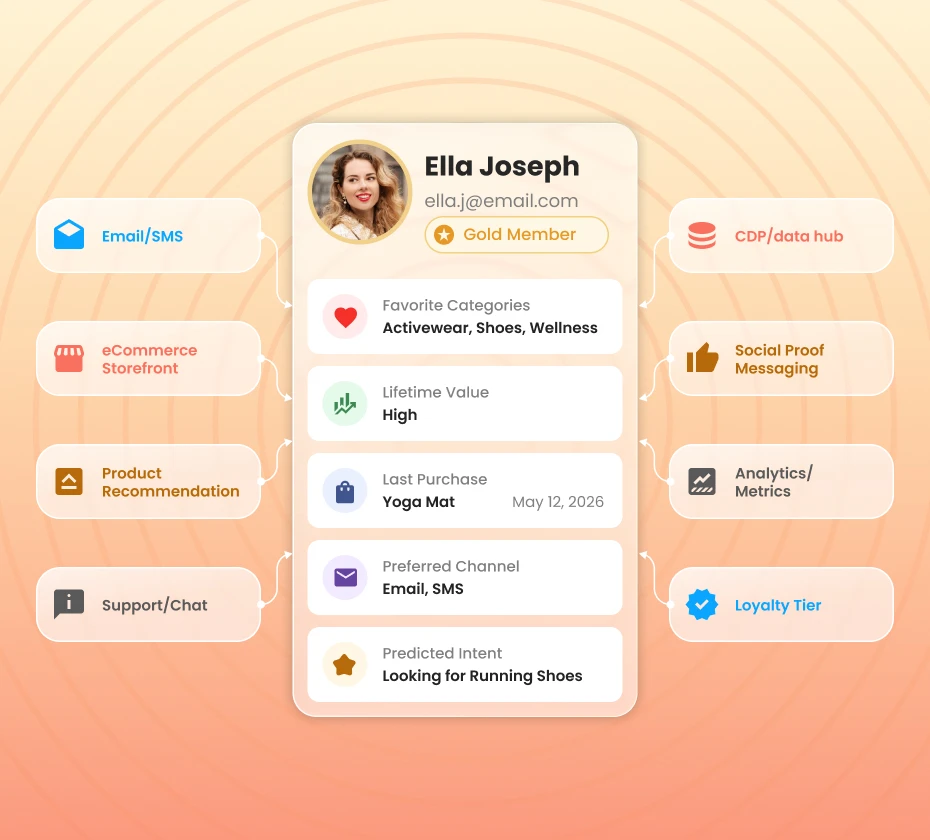
TL; DR 
What Is eCommerce Customer Retention, Metrics & Strategies

Ecommerce customer retention is a retailer’s ability to keep customers coming back to buy again over time. It is one of the clearest signals of sustainable growth because retaining existing customers is often more efficient than constantly replacing them.1
- Customer retention measures how well a retailer keeps existing customers engaged and buying over time.
- The most useful retention metrics include customer retention rate, churn rate, repeat purchase rate, customer lifetime value, average order value, and purchase frequency.
- A good retention rate depends on category, purchase cycle, price point, and customer behavior.3
- The strongest retention strategies usually combine personalization, loyalty and promotion strategy, post-purchase engagement, and cross-channel consistency.
- AI and unified customer data help retailers improve retention by making journeys more relevant and better timed.2
Customer retention has become one of the clearest measures of healthy ecommerce growth. As acquisition costs rise and competition gets tougher, brands need more value from the customers they already have. That is one reason retention keeps moving up the priority list for ecommerce teams. Bain has long reported that raising retention by just 5% can increase profits by 25% to 95%, while McKinsey has found that effective personalization can reduce acquisition costs by as much as 50% and lift revenue by 5% to 15%.1 2
Ecommerce customer retention is the rate at which you retain your existing customers and how often they come back to shop over time. In ecommerce, how do you measure retention? Read on. You’ll learn what ecommerce customer retention is, how it is measured, which metrics matter most, what a great retention rate looks like, and the strategies that can increase repeat purchases, customer lifetime value, and long-term growth.
What Is eCommerce Customer Retention?
Definition of Customer Retention in eCommerce
Ecommerce customer retention is how well a retailer turns first-time buyers into returning customers and returning customers into loyal, high-value customers.
Customer retention in ecommerce is not only about whether someone buys again. It is about whether the experience gives that shopper enough reason to keep choosing the brand over time.
Online customer retention focuses on keeping digital shoppers engaged across touchpoints such as the website, app, email, SMS, paid media, and customer support. The goal is to make every return visit and follow-up interaction more relevant, useful, and easier to act on.
Why Retention Matters More Than Acquisition
Acquisition is how you fill the funnel with new shoppers. Retention is how much value those shoppers bring you in the long run.
Retention has become an all-time top priority for many retailers. Acquisition costs are harder to manage. Paid channels are competitive. Browsing privacy changes have impacted targeting. There are more options than ever for shoppers. Retention offers a solution to that pressure by bolstering the lifetime value of the customers a brand already has in its hands.
A strong retention program can drive repeat purchases, increase customer lifetime value, reduce reliance on new-customer acquisition, and heighten ROI on marketing spend.
Retention vs Churn Rate in eCommerce
Retention and churn are closely related, but they measure opposite sides of customer behavior.
Ecommerce customer retention is the % of customers that continue doing business with you during a particular period. Ecommerce churn rate is the % of customers that drop out of doing business with you during a particular period.
Why eCommerce Customer Retention Is Critical for Growth
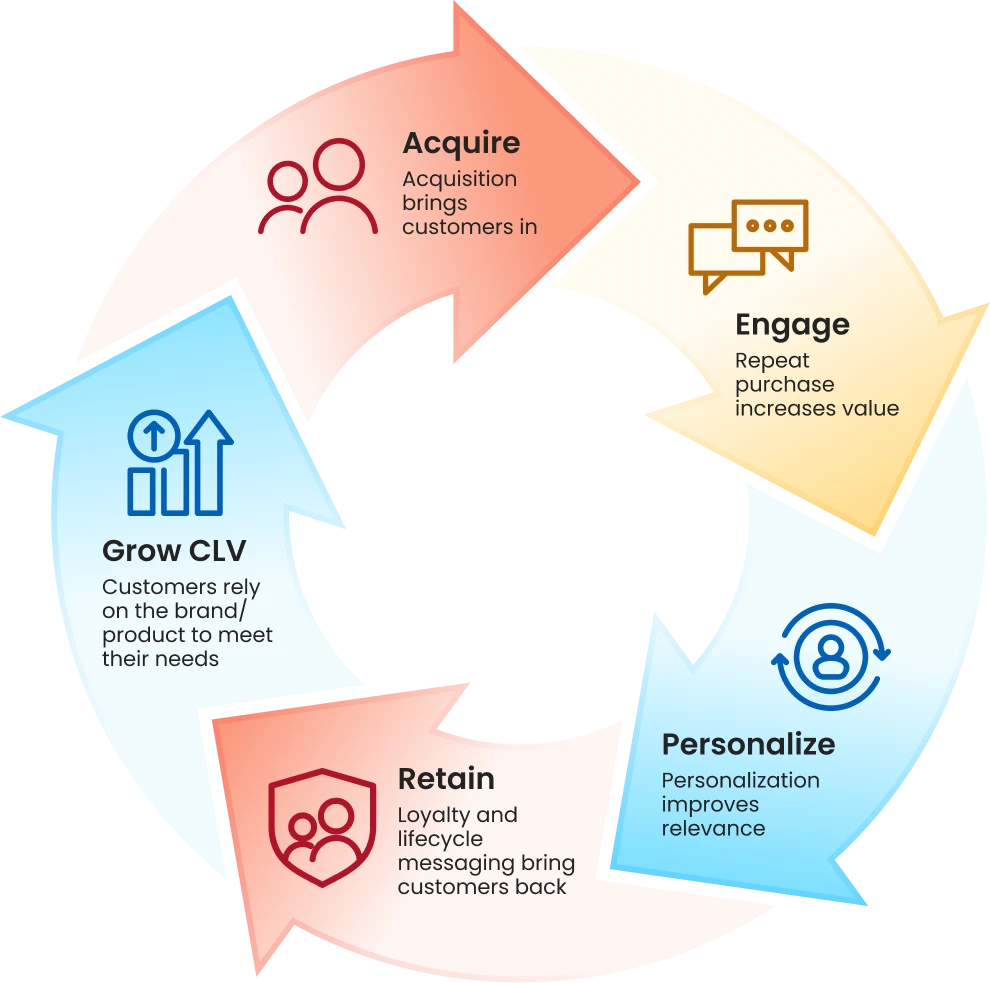
Impact on Revenue, Profitability, and ROAS
Customer retention improves the quality of ecommerce revenue. Returning customers usually know the brand, need less persuasion, and are more likely to respond to relevant offers. That makes repeat revenue more efficient than growth that depends only on new-customer acquisition.
Retention also affects return on ad spend (ROAS). When brands bring customers back through smarter lifecycle marketing, personalized offers, and better post-purchase experiences, the value of the original acquisition improves. A first order may recover only part of the cost of acquisition. Repeat orders help improve the economics over time.
This is why ROAS and customer retention should be looked at together. A campaign that acquires customers at scale may look successful in the short term, but its true value depends on whether those customers come back.
Want to know where your site is losing revenue per visitor?
Retention improves when returning shoppers find more relevant products, offers, and journeys. An RPV teardown can help identify missed opportunities across product discovery, recommendations, content, and conversion paths.
Relationship Between Retention and Customer Lifetime Value (CLV)
Customer lifetime value (CLV) estimates how much revenue a customer is likely to generate over the full relationship with a brand. Retention is one of the biggest drivers of CLV because customers who return more often create more value over time.
A retailer can improve CLV by increasing:
- Repeat purchase rate
- Average order value
- Purchase frequency
- Customer lifespan
- Cross-sell and upsell effectiveness
How Retention Reduces Customer Acquisition Cost (CAC)
Customer acquisition cost (CAC) measures how much a business spends to acquire a new customer. Retention does not change what was spent to acquire a customer in the first place, but it improves the return on that spend.
Retention also reduces pressure on acquisition teams. Brands with strong repeat purchase behavior do not need to replace as many lost customers just to maintain revenue.
Retention vs Growth: Why Top Brands Focus on Existing Customers
Healthy ecommerce growth needs both acquisition and retention. Acquisition fills the funnel. Retention compounds value from the customers already in it.
Top retailers focus on existing customers because repeat behavior reveals what the brand is doing well. When customers return, it usually means the experience, product relevance, pricing, service, and communication are working together. When customers do not return, it often points to gaps in the journey.
That is why retention should not sit only with CRM or loyalty teams. It spans across ecommerce, merchandising, marketing, customer experience, and data teams.
Key eCommerce Customer Retention Metrics You Must Track
The customer retention metrics ecommerce teams should track include customer retention rate, churn rate, repeat purchase rate, customer lifetime value, purchase frequency, and average order value.
Customer Retention Rate (CRR)
Customer retention rate (CRR) measures the percentage of customers a business keeps during a defined period.
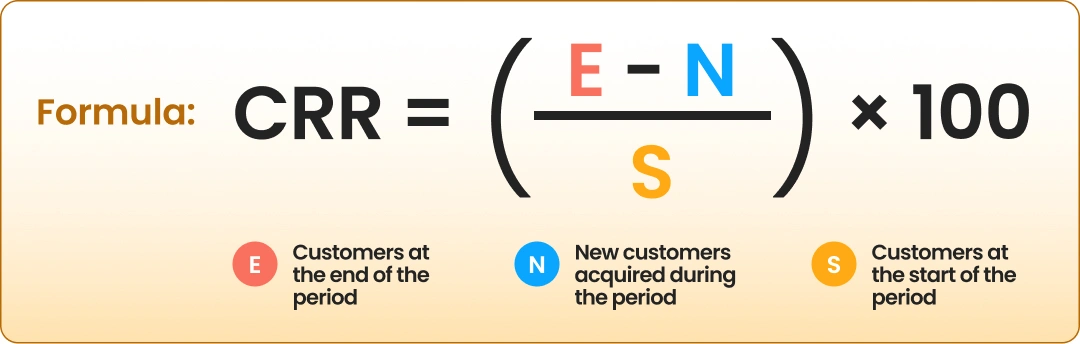
For example, if you started the month with 1,000 customers, ended with 1,100 customers, and acquired 200 new customers during that month, your CRR would be:
CRR = ((1,100 – 200) / 1,000) × 100 = 90%
A rising CRR usually signals that more customers are staying active. A falling CRR may point to weaker customer experience, poor post-purchase engagement, pricing pressure, or stronger competition.
Churn Rate in eCommerce
Churn rate measures the percentage of customers who stop buying during a given period. In ecommerce, churn can be harder to define than in subscription businesses because customers do not always cancel. They simply stop shopping.
For this reason, retailers need to define churn based on category behavior. A grocery customer may be considered inactive after a few weeks. A furniture customer may not buy again for many months and still be a healthy customer.
Useful churn analysis should account for:
- Average purchase cycle
- Product category
- Seasonality
- Customer segment
- Acquisition channel
- First purchase type
Repeat Purchase Rate (Returning Customer Rate)
Repeat purchase rate, also called returning customer rate, measures the percentage of customers who make more than one purchase.
Formula:
Repeat purchase rate = (Customers with more than one purchase / Total customers) × 100
This is one of the most useful ecommerce retention metrics because it shows whether customers are coming back after their first order.
Customer Lifetime Value (CLV)
Customer lifetime value (CLV) estimates the total revenue a customer is expected to generate over the course of their relationship with a brand.
CLV helps teams understand which customers are most valuable and which retention investments make sense. For example, a retailer may choose to spend more on loyalty offers, personalized recommendations, or premium support for high-CLV segments.
CLV should not be read in isolation. It becomes more useful when viewed alongside repeat purchase rate, average order value, purchase frequency, and acquisition cost.
Net Promoter Score (NPS)
Net Promoter Score (NPS) is an indicator of a customer’s likelihood to recommend their brand to friends and family. This is typically captured through a survey that poses a question along the lines of “How likely are you to recommend this business to people you know?”
NPS can give you a directional indication of loyalty and satisfaction, but it should not take the place of behavioral retention metrics. A customer can say they like a brand but still shop elsewhere for a better price, convenience, assortment, or service level.
Purchase Frequency and Average Order Value (AOV)
Purchase frequency captures the frequency that a customer purchases within a defined period. Average order value (AOV) captures the amount that a customer purchases within a defined period.
Customer Retention Rate (CRR)
The percentage of existing customers who stayed active during a defined period.
Churn Rate
The percentage of customers who stopped buying or became inactive during a defined period.
Repeat Purchase Rate
The percentage of customers who made more than one purchase.
Customer Lifetime Value (CLV)
The total revenue a customer is expected to generate over their relationship with the brand.
Net Promoter Score (NPS)
How likely customers are to recommend the brand to others.
Purchase Frequency
How often customers buy within a defined period.
Average Order Value (AOV)
The average amount customers spend per order.
What Is a Good Customer Retention Rate for eCommerce?
Average customer retention rate ecommerce benchmarks can be useful, but they should never be treated as universal targets because grocery, beauty, electronics, fashion, and furniture all have different buying cycles.
Industry Benchmarks: Fashion, Electronics, Grocery, and D2C
There is no universal retention rate that applies across ecommerce. A good retention rate depends on product type, purchase cycle, price point, and customer need.
Categories with frequent repeat needs, such as grocery, beauty, pet care, food and beverage, and supplements, usually have more natural retention opportunities. Categories with longer purchase cycles, such as furniture, electronics, appliances, and luxury goods, may have lower purchase frequency but higher order value.
Decile’s Q1 2025 ecommerce benchmarks show how much customer mix varies by category. The ratio of new to returning customers was 2.48 in home goods, 1.33 in fashion and apparel, and 1.21 in health and beauty. In supplements and food and beverage, returning customers outnumbered new customers, with ratios of 0.81 and 0.88 respectively. Purchase frequency also varied by category, from 1.1 in fashion and apparel to 1.3 in supplements.3
For retailers, the lesson is simple: benchmark against businesses with similar purchase behavior, not against a generic ecommerce average.
Average Churn Rate for eCommerce
Average churn rate in ecommerce is difficult to standardize because purchase frequency varies so widely. A customer who does not buy again for six months may be inactive in grocery, but still normal in electronics or furniture.
Instead of relying on one average churn number, retailers should define churn windows by category and cohort. For example:
- Grocery: no purchase in 30 to 60 days
- Beauty or Supplements: no purchase after expected replenishment period
- Fashion: no purchase across a season or campaign cycle
- Electronics: no engagement or accessory purchase after a major purchase
- B2B eCommerce: no reorder within the normal procurement cycle
This makes churn measurement more practical and more accurate.
How to Benchmark Your Retention Performance
The best retention benchmarks combine external context with internal trend lines.
Retailers should compare retention by acquisition channel, product category, first purchase type, etc.
A good benchmark answers two questions:
- Are we improving against our own past performance?
- Are we performing well for our category and customer type?
How to Calculate eCommerce Customer Retention Rate (Step-by-Step)
Formula Explanation
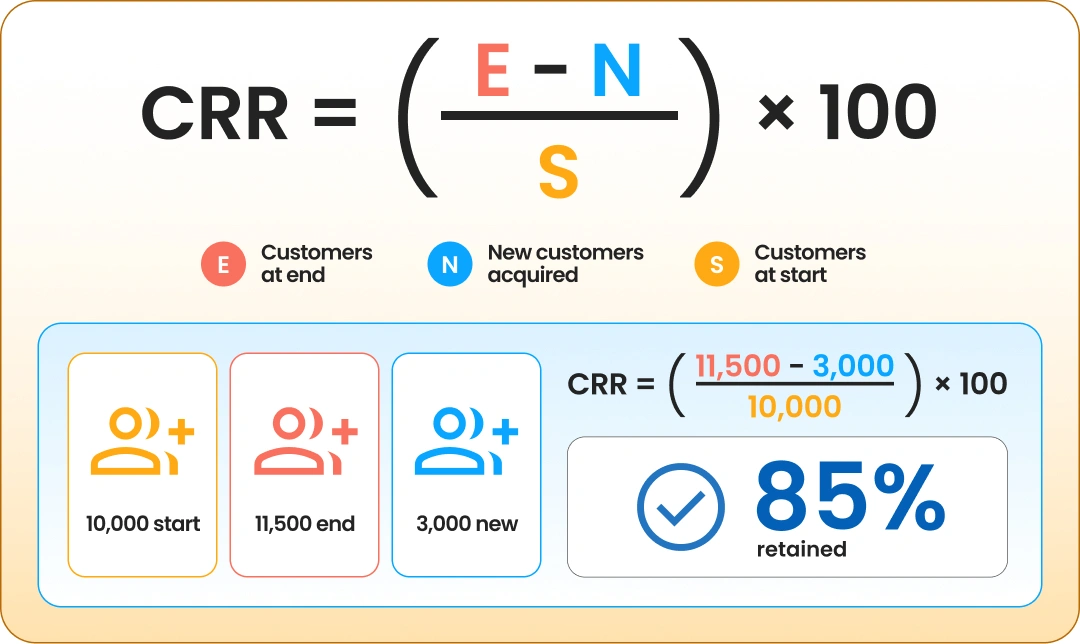
Use this formula to calculate customer retention rate:
Customer retention rate = ((Customers at end of period – New customers acquired during period) / Customers at start of period) × 100
The formula removes new customers from the ending customer count so you can measure how many of your original customers stayed active.
Before calculating CRR, define:
- The time period
- What counts as an active customer
- Whether you are measuring all customers or a specific cohort
- Whether refunds, cancellations, or dormant accounts should be excluded
Real Example Calculation
Assume an ecommerce retailer has:
- 10,000 customers at the start of Q1
- 11,500 customers at the end of Q1
- 3,000 new customers acquired during Q1
Customer retention rate = ((11,500 – 3,000) / 10,000) × 100
Customer retention rate = 85%
This means the retailer retained 85% of the customers it had at the start of the quarter.
Common Mistakes in Retention Calculation
Mistakes include:
- Counting orders instead of customers
- Using inconsistent time periods
- Forgetting to remove new customers from the ending count
- Comparing customers from very different acquisition channels
- Ignoring refunds, cancellations, or inactive accounts
Top eCommerce Customer Retention Strategies
Customer retention optimization is the ongoing process of improving the experiences, campaigns, and journeys that encourage customers to return. For ecommerce retailers, this means testing what improves repeat purchase rate, customer lifetime value, purchase frequency, and reactivation over time.
Customer retention strategies for ecommerce should focus on repeat purchase behavior, better post-purchase journeys, relevant offers, and customer experiences that make people want to return.
The best ecommerce customer retention strategy is usually not one tactic, but a connected program that brings together personalization, loyalty, content, customer data, and service.
The ecommerce customer retention methods below give teams practical ways to improve repeat purchase behavior without relying only on discounts.
1. eCommerce Content Personalization at Scale with AI
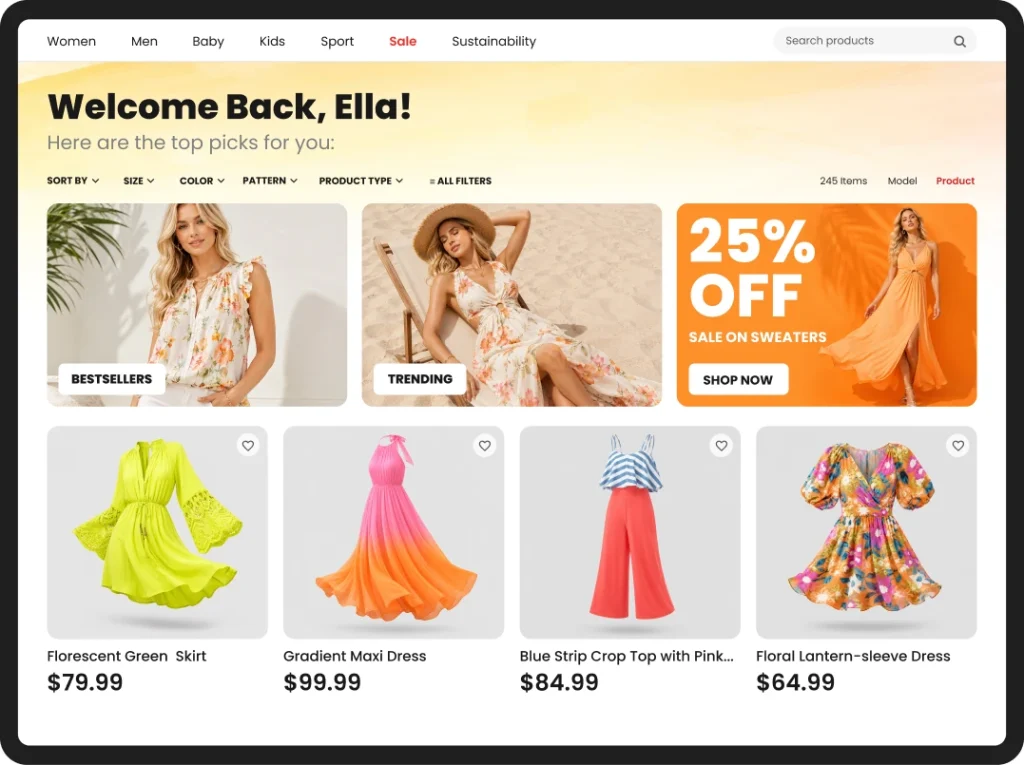
Ecommerce content personalization plays an important role. The content a shopper sees on a homepage, product detail page, email, or app screen should reflect what the retailer knows about that customer’s needs and their journey stage.
Recommend™ enables retailers to personalize product discovery and recommendations around shopper intent. Matas is an example of how personalized recommendations can support ecommerce growth by making the shopping journey more relevant.
2. Customer Loyalty and Retention Programs
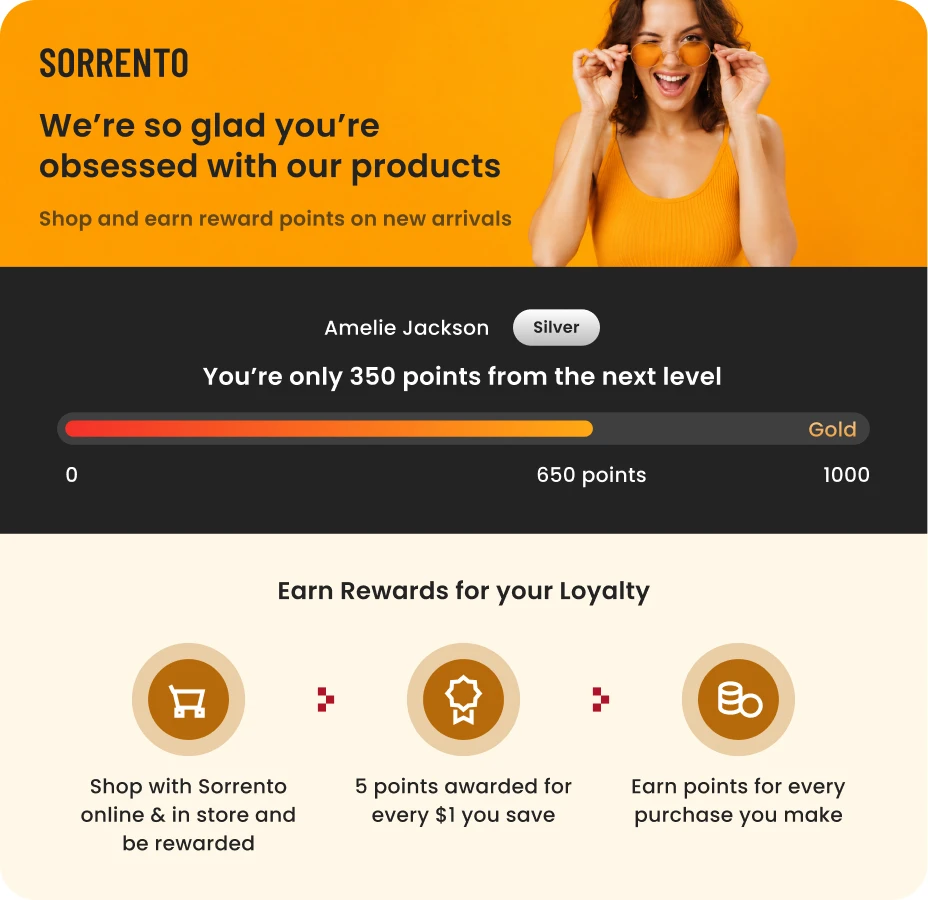
Loyalty programs help retailers encourage repeat behavior, but the strongest programs are built around more than points. Rewards, promotions, and benefits must feel relevant to their shopping habits.
Common loyalty program mechanics include points-based rewards, VIP tiers, member-only pricing, etc.
Audience Manager helps marketers build more precise loyalty, promotion, and reactivation audiences. This makes it easier to target customers based on behavior, value, lifecycle stage, or likelihood to respond.
3. Post-Transaction Engagement Strategies
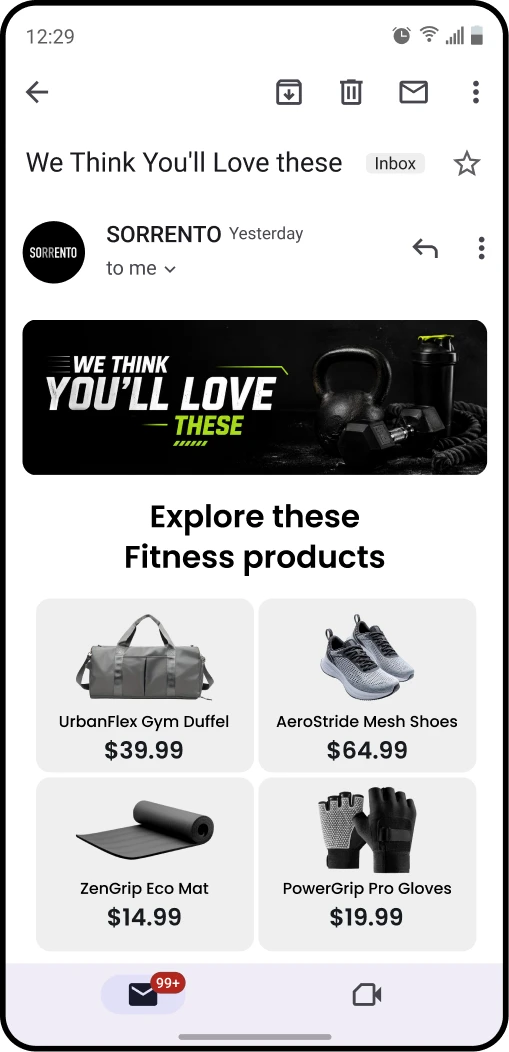
Post-transaction engagement strategies for customer retention focus on what happens after a customer buys. This part of the journey is often underused, even though it shapes whether a customer feels confident enough to return.
These best practices for customizing post-checkout experiences support customer retention by making the period after purchase feel clearer, more useful, and more personal.
Useful post-transaction engagement can include order confirmations, shipping and delivery updates, review requests, replenishment reminders, etc.
Active Content supports post-purchase engagement with triggered, personalized lifecycle content. Consum shows how stronger lifecycle execution can also improve the operational side of retention marketing by reducing campaign effort and improving speed to market.
4. Omnichannel and Unified Commerce Experiences
Customers move across websites, apps, email, paid media, stores, and support channels. They expect the brand to recognize them across that journey.
Unified commerce helps make this possible by connecting data and experiences across channels. This can improve retention by:
- Reducing repeated or irrelevant messages
- Improving offer timing
- Making loyalty programs more consistent
- Helping service teams understand customer history
- Supporting seamless journeys across web, app, email, and store
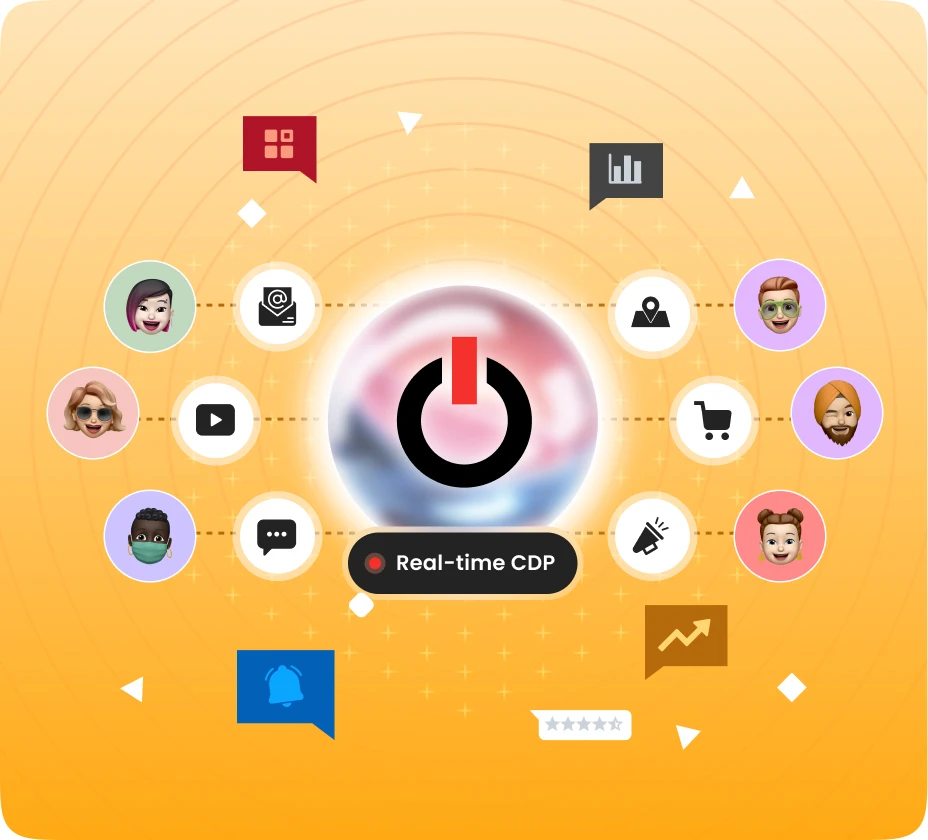
Real-time CDP plays a central role here by helping retailers unify customer data and activate it across channels.
5. Email and SMS Retention Marketing
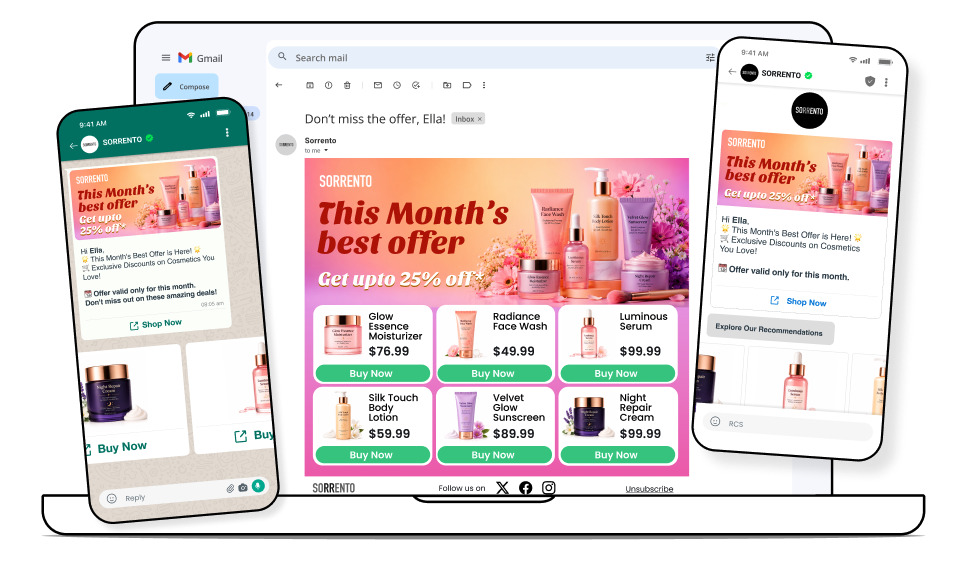
Email and SMS are important retention channels because they are direct and measurable across the customer lifecycle. High-impact lifecycle campaigns such as a welcome series, post-purchase follow-ups, or replenishment reminders match customer intent and timing.
A powerful digital marketing retention strategy ties email, SMS, WhatsApp, paid media, loyalty, and onsite personalization around the same customer signals. This allows retailers to move beyond one-off campaigns and create lifecycle journeys that mirror customer behavior, timing and purchase intent.
6. Subscription and Replenishment Models
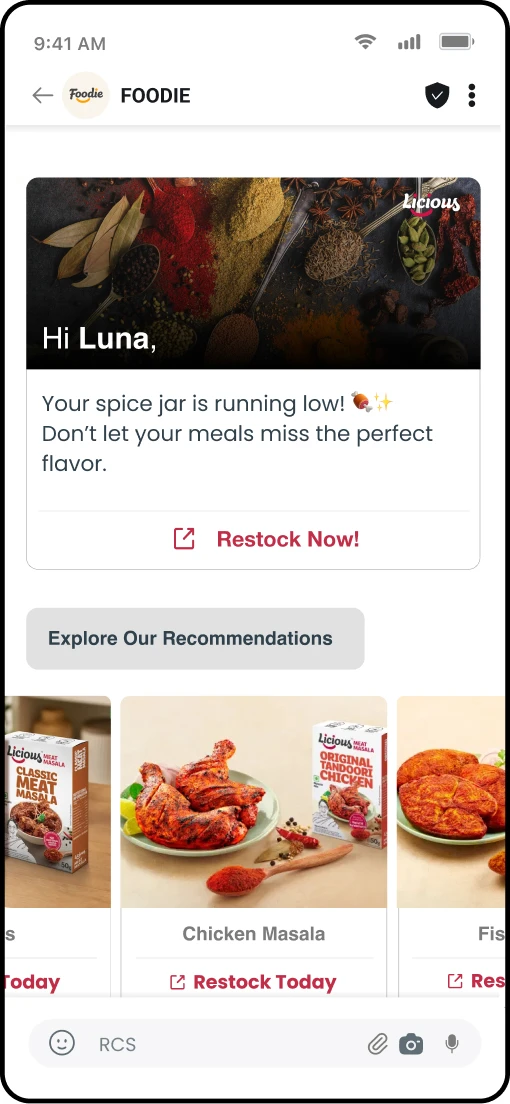
Subscription and replenishment models can improve retention in categories where customers buy products repeatedly. This includes groceries, supplements, beauty, pet care, household essentials, and B2B supplies.
These models work because they reduce effort for the customer. Instead of remembering to reorder, the customer receives the right product at the right time.
The best replenishment programs give customers control. They allow shoppers to pause, skip, change frequency, swap products, or adjust quantities. Convenience drives retention only when it feels flexible.
7. Retargeting and Paid Media Optimization
Retargeting can help with retention when it is aimed at people who already know the brand. It does not have to be limited to abandoned carts or first-time purchases. For existing customers, paid media can be used to remind them about products they may need again, show them relevant categories, promote loyalty offers, or bring back shoppers who have gone quiet.
For example, a beauty brand may use retargeting to remind a customer to restock a product they bought a month ago. A fashion retailer may show previous buyers new arrivals in a category they often browse. A grocery or household goods brand may promote repeat-purchase offers to customers who buy on a predictable cycle.
This is where ROAS and retention need to be viewed together. A campaign may look successful because it brings in quick conversions, but its real value is higher when those customers keep coming back after the first click.
8. Customer Support as a Retention Tool
Customer support can decide whether a person buys again. A late package or product issue can be forgiven if the brand handles it properly. The biggest turn off for people is the feeling that no one is listening, or it takes too much effort to get a simple answer.
It also helps when support does not feel disconnected. If a customer has already explained a problem on chat, they should not have to start from the beginning on email or phone. That kind of repetition makes even a small issue feel bigger.
Creative ways to improve customer experience can be simple: faster support, clearer delivery updates, better product guidance, easier returns, or reminders that arrive at the right time.
9. Community Building and UGC
Community content keeps people engaged between purchases. But the customer may not be ready to buy again today but seeing useful posts, honest reviews or customer photos can keep the brand familiar. Familiarity over time can make the next purchase feel easier.
The trick is to use social proof where it helps the shopper make a decision. This should remove doubt, demonstrate real usage and reduce perceived risk in buying.
10. Gamification and Experiential Commerce
Customers should be able to see the point right away. What do I do? What do I get? Is it worth it? If those answers are clear, the experience can give them a small reason to come back.
For retailers, gamification should not be added just to make the site look more interactive. It should support something real, such as finding better products, earning useful rewards, joining a community, or feeling recognized as a returning customer.
How much revenue are you leaving on the table?
Customer retention depends on the quality of every return visit. Get an RPV teardown from Algonomy to uncover where personalization, recommendations, search, content, and journey orchestration can improve revenue per visitor.
Advanced Retention Strategies Using AI & Data
AI tools to boost ecommerce sales and customer retention are most useful when they help teams act on real customer signals, such as purchase history, browsing behavior, churn risk, replenishment timing, and product affinity. These capabilities are central to driving ecommerce customer retention because they help teams respond to customer behavior while the signal is still fresh.
Agentic AI for eCommerce Customer Retention
Agentic AI refers to AI systems that can help plan, decide, and act across parts of a workflow with limited manual intervention. In e-commerce retention, this can support faster decisions about which customers to target, what message to send, which offer to use, and when to act.
In retention, the most useful application is not automation for its own sake. It is better timing, better relevance, and faster response to customer signals.
Predictive Analytics for Churn Prevention
Predictive analytics helps retailers identify customers who may be at risk of disengaging before they fully churn.
Signals can include declining purchase frequency, lower email engagement, fewer site visits, etc.
Once risk is identified, retailers can take action through personalized offers, product recommendations, service outreach, replenishment reminders, or tailored win-back campaigns.
The goal is to act before the customer disappears.
Real-Time Personalization Engines
Real-time personalization engines help retailers respond to what a customer is doing now, not what they were doing weeks ago.
Why it matters: Customer intent can change rapidly. A shopper browsing baby products, winter apparel or high-end electronics is providing you useful context in the moment. A real-time system can then use this context to change recommendations, content, offers and next-best actions.
For retention, this creates a better experience for returning customers. They do not have to start from scratch every time they visit. The brand can respond with more relevant products, content, and reminders.
Leveraging First-Party Data & CDPs
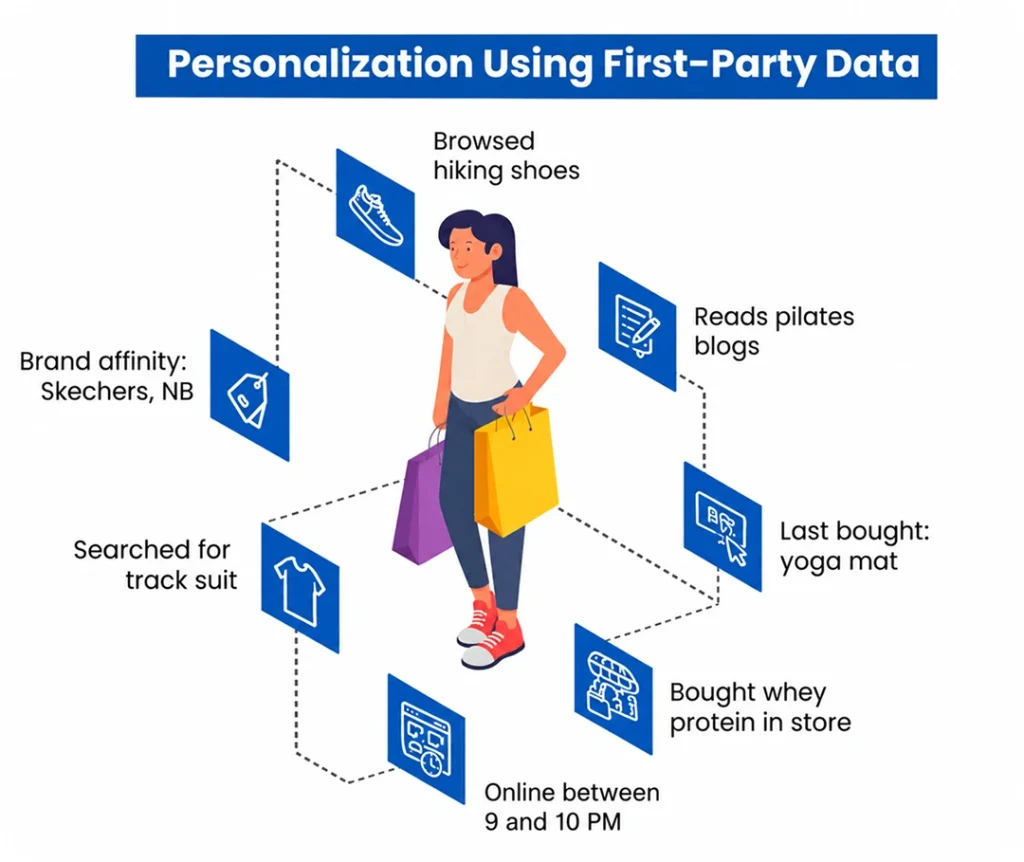
First-party data is data a retailer collects directly from its customer interactions. This could be purchase history, browsing behavior, loyalty activity, email engagement, preferences, and service interactions.
A customer data platform (CDP) helps to unify this data into customer profiles that can then be used across channels. This is important for maintaining retention. If you don’t have a unified view, your teams risk sending irrelevant messages, missing churn signals or treating loyal customers as new visitors.
A Real-time CDP allows retailers to act on customer signals while they’re still relevant. It enables segmentation, personalization, lifecycle marketing and cross-channel orchestration. Here’s why it matters in practice, says McDonald’s India. With a unified view of the customer and centralized customer data, the brand was able to create granular customer segments and enable CRM goals.
Revise this image from the 2024 Guide to Ecomm. Personalization | “Personalization Using First-Party Data”
Automation of Customer Journeys
Retention journeys often involve many touchpoints. A customer may receive a welcome message, browse products, make a first purchase, receive delivery updates, join a loyalty program, get a replenishment reminder, and later receive a win-back offer.
Managing these journeys manually is difficult. Automation helps teams scale the right sequence of actions based on customer behavior.
Useful retention journey automations include:
- Welcome journeys
- Post-purchase journeys
- Replenishment journeys
- Loyalty activation journeys
- VIP journeys
- Churn prevention journeys
- Win-back journeys
The best automated journeys still feel human because they are relevant, timely, and useful.
Impact of Unified Commerce on Customer Retention
What Is Unified Commerce?
Unified commerce is the consolidation of customer data, product data, inventory, promotions, orders and engagement channels, enabling retailers to offer a consistent experience across touchpoints.
At its core, unified commerce enables the retailer to view the customer as a single customer throughout the journey. The customer’s experience should be the same context whether they are shopping online, on an app, via email, in the store or with support.
Why Fragmented Data Kills Retention
Fragmented data weakens retention because it creates disconnected experiences.
Common problems include:
- Customers receiving irrelevant offers
- Loyalty status not being recognized across channels
- Online and store behavior staying separate
- Support teams lacking purchase context
- Replenishment reminders missing the right timing
- Repeated campaigns going to the wrong segments
- High-value customers being treated like first-time shoppers
Each of these gaps can make the customer feel unknown. Over time, that weakens trust and reduces the likelihood of repeat purchase.
How Unified Commerce Improves Customer Experience
Unified commerce improves retention by making experiences more consistent and relevant.
It helps retailers:
- Recognize customers across channels
- Personalize recommendations with better context
- Coordinate loyalty and promotions
- Connect online and offline behavior
- Support better service interactions
- Improve timing of lifecycle messages
- Reduce duplicate or conflicting campaigns
For customers, the result is simpler. The brand feels more consistent, more useful, and easier to shop from.
Real-World Use Cases
Unified commerce can improve retention in practical ways:
- A grocery customer receives a replenishment reminder based on past purchase timing.
- A fashion customer sees product recommendations based on browsing, purchase history, and preferred sizes.
- A loyalty member receives a promotion that reflects both online and store behavior.
- A customer support agent can see purchase history and loyalty status before resolving an issue.
- A lapsed customer receives a win-back offer based on categories they used to buy.
These use cases depend on shared customer context. Without that context, personalization and retention campaigns remain limited.
Best Practices for Customizing Post-Checkout Experiences
Order Confirmation Optimization
An order confirmation should be more than a payment confirmation. It should reassure the customer, set expectations clearly and direct the next step.
A strong order confirmation can contain:
- Summary of order
- Delivery schedule
- Support connections
- Loyalty point accrual
- Prompt for creating account
- Care information
- Appropriate next product recommendations
This is one of the first retention moments after the purchase. A helpful, clear confirmation builds confidence.
Cross-Sell and Upsell Opportunities
Post-checkout cross-sell and upsell opportunities should be relevant to the customer’s purchase. The goal is not to push more products immediately. The goal is to help the customer get more value from what they just bought.
Examples include:
- Accessories for electronics
- Styling suggestions for fashion
- Refills for beauty products
- Complementary grocery items
- Protection plans for high-value products
- Setup guides or add-ons for B2B ecommerce purchases
Personalized product recommendations can make these moments more useful and less intrusive.
Delivery Experience Personalization
Delivery is a high-attention moment in the customer journey. Customers want to know where their order is, when it will arrive, and what to do if something changes.
Retailers can personalize the delivery experience through:
- Proactive shipping updates
- Delivery preference reminders
- Local store pickup options
- Delay notifications
- Product care tips before arrival
- Category-specific follow-up content
A smoother delivery experience reduces anxiety and supports repeat purchase behavior.
Returns and Refund Experience
Returns and refunds have a strong effect on retention. A difficult return experience can stop a customer from buying again, even if the product was good.
A retention-friendly returns experience should be:
- Easy to understand
- Transparent about timelines
- Simple to initiate
- Consistent across channels
- Supported by clear communication
Retailers should treat returns as part of the customer relationship, not only as a cost.
Common eCommerce Retention Mistakes to Avoid
Over-Reliance on Discounts
Discounts can drive short term sales but too much discounting can train customers to wait for sales. It can also eat into margins and dilute brand value.
A stronger strategy is to use discounts rarely and pair them with relevance, loyalty benefits and personalized timing.
Disregarding Customer Data
Retention is about understanding customer behaviour. “You miss the opportunity to personalize the experience by ignoring browsing history, purchase patterns, loyalty activity or lifecycle stage.
The fix: Use customer data across teams and channels.
Poor Onboarding
The first few interactions after a customer’s first purchase matter. If a retailer does not guide the customer, explain benefits, collect preferences, or encourage the next best action, the relationship may stall.
A good onboarding journey can improve repeat purchase behavior by helping customers see more value early.
Lack of Personalization
Generic experiences make retention harder. Returning customers expect the brand to remember something about them, whether that means preferred categories, sizes, replenishment timing, or loyalty status.
Personalization does not need to be complex at the start. Even basic segmentation and product relevance can improve the customer experience.
Inconsistent Omnichannel Experience
A customer should not feel like a stranger when switching from email to website, app, store, or support. Inconsistent experiences create friction and reduce trust.
Retailers need connected data, coordinated campaigns, and shared customer context to prevent these gaps.
eCommerce Customer Retention Examples
Personalized Recommendation Engines
Employing personalization in recommendation engines aids retention by making repeat visits more relevant. Returning customers should be able to search for products based on what they have done, what they are looking for and what they are likely to need.
Matas demonstrates how personalized recommendations can boost ecommerce growth through better product relevance. This kind of personalization enables retailers to go beyond static merchandising and enables more helpful discovery throughout the customer journey.
Loyalty Program Success Stories
A really good loyalty program gives customers a reason to come back, but it’s got to be relevant.
Points, tiers and rewards are more effective when they are based on customer behavior and preferences.
For example, a beauty retailer might reward replenishment behavior, whereas a fashion retailer might offer early access to new collections. A grocery retailer could offer tailored promotions based on household purchasing patterns. In both cases, audience segmentation and offer strategy are more effective when they are in alignment.
Audience Manager supports this kind of retention program by helping marketers build and activate more precise audiences for loyalty, promotions, and reactivation.
AI-Driven Retention Campaigns
AI-driven retention campaigns use customer behavior to decide who to target, when to reach them, and what message or offer is most relevant.
Examples include:
- Predicting churn risk
- Triggering replenishment reminders
- Personalizing win-back campaigns
- Recommending next-best products
- Adapting lifecycle content based on engagement
- Suppressing irrelevant messages
Consum highlights the operational side of this challenge. Personalized lifecycle marketing is not only about better messages. It also requires faster campaign execution, easier content management, and the ability to act at scale.
How Algonomy Helps Drive eCommerce Customer Retention
AI Personalization Engine
Retention improves when every customer interaction becomes more relevant. Recommend™ helps retailers personalize product discovery and recommendations based on shopper behavior, context, and intent.
This supports retention by helping returning customers find the next right product faster, discover complementary items, and continue the relationship beyond the first order.
Customer Data Platform (CDP) Capabilities
A customer data platform (CDP) helps retailers unify customer data and make it usable across channels. Algonomy’s Real-time CDP supports retention by helping teams build a more complete view of customer behavior and activate that context when it matters.
This is especially important for loyalty, lifecycle marketing, churn prevention, and omnichannel personalization.
Real-Time Decisioning
Timing often determines retention opportunities. A replenishment reminder, win-back message, loyalty offer, or product recommendation is more effective when it can respond to customer behavior in the moment. Real-time decisioning allows retailers to react to live signals instead of depending on static segments or campaign cycles that have long lead times.
Cross-Channel Orchestration
Customers are moving across channels and retention programs need to move with them. Algonomy provides cross-channel retention support through features in recommendations, lifecycle content, audience management and customer data.
Recommend™, Active Content, Audience Manager, and Real-time CDP work together to help retailers build more consistent and relevant customer journeys across web, email, app, paid media, and other touchpoints.
Future Trends in eCommerce Customer Retention
Agentic AI
Predictive Commerce
Zero-Party Data
Hyper-Personalization
Privacy-First Marketing
Conclusion
Retaining ecommerce customers is one of the most powerful levers for sustainable growth. It helps retailers to drive repeat purchases, increase customer lifetime value and make acquisition spend work harder over time.
The most successful retention programs involve measurement, personalization, loyalty strategy, post-purchase engagement, unified customer data and cross-channel orchestration. And AI adds another layer, empowering retailers to respond more quickly and more relevantly to customer signals.
For ecommerce teams, retention is no longer a narrow CRM issue. It’s a larger growth capability that blends marketing, merchandising, data and customer experience. Retailers that are able to build this capability are in a stronger position to keep customers engaged, increase long-term value and compete in a crowded market.
See where personalization can improve revenue per visitor
Algonomy helps retailers connect recommendations, lifecycle content, audience management, and real-time customer data to create more relevant ecommerce journeys. Start with an RPV teardown to identify the highest-value opportunities on your site.
FAQs
1. What is eCommerce customer retention?
Ecommerce customer retention is the ability of a retailer to keep customers engaged and buying over time. It is usually measured through repeat purchases, retention rate, churn rate, customer lifetime value, and purchase frequency.
2. How to calculate customer retention rate in eCommerce?
Use this formula: customer retention rate = ((customers at end of period – new customers acquired during period) / customers at start of period) × 100. This shows what percentage of existing customers stayed active during the period.
3. What is a good retention rate for eCommerce?
A good retention rate depends on category, purchase cycle, and customer behavior. Grocery, food and beverage, beauty, and supplements usually offer more natural repeat-purchase opportunities than categories such as furniture or electronics.3
4. What is churn rate in eCommerce?
Churn rate measures the percentage of customers who stop buying or become inactive during a defined period. In ecommerce, churn should be defined based on the expected purchase cycle for the category.
5. How can I increase eCommerce customer retention?
You can increase ecommerce customer retention through personalization, loyalty programs, post-purchase engagement, lifecycle email and SMS, customer support, replenishment reminders, retargeting, and unified customer data.
6. What are the best eCommerce retention strategies?
The best ecommerce retention strategies include AI-driven personalization, loyalty and promotion programs, post-transaction engagement, omnichannel consistency, lifecycle marketing, subscription or replenishment models, customer support, and churn prevention campaigns.
7. How does personalization impact retention?
Personalization helps retention by making shopping experiences more relevant. It helps customers to discover products, get useful recommendations, better offers and interact with content that reflects their behaviour and preferences.2
8. What is the difference between retention and loyalty?
Retention measures whether customers continue buying over time. Loyalty reflects a deeper preference for the brand. A retained customer may buy again because of convenience or price, while a loyal customer is more likely to choose the brand repeatedly and recommend it to others.
9. How does AI improve customer retention?
AI improves customer retention by identifying behavioral patterns, predicting churn risk, personalizing recommendations, automating lifecycle journeys, and enabling retailers to act on customer signals in real time.
10. What is returning customer rate in eCommerce?
Ecommerce returning customer rate, also called repeat purchase rate, measures the percentage of customers who make more than one purchase. It helps retailers understand how many first-time buyers become repeat customers.
11. How to increase customer retention rate?
To increase customer retention rate, retailers need to improve the reasons customers come back. The biggest levers are personalization, loyalty and promotion strategy, post-purchase engagement, replenishment reminders, better customer support, and connected customer data.
Sources
- Bain & Company, “E-loyalty: Your Secret Weapon on the Web.” Source for the retention-profitability finding.
- McKinsey & Company, “What is personalization?” and “Marketing’s Holy Grail: Digital Personalization at Scale.” Sources for personalization impact on acquisition costs, revenue, and marketing spend efficiency.
- Decile, “Q1 2025 E-commerce Industry Benchmarks.” Source for new versus returning customer ratios and purchase frequency benchmarks by category.