


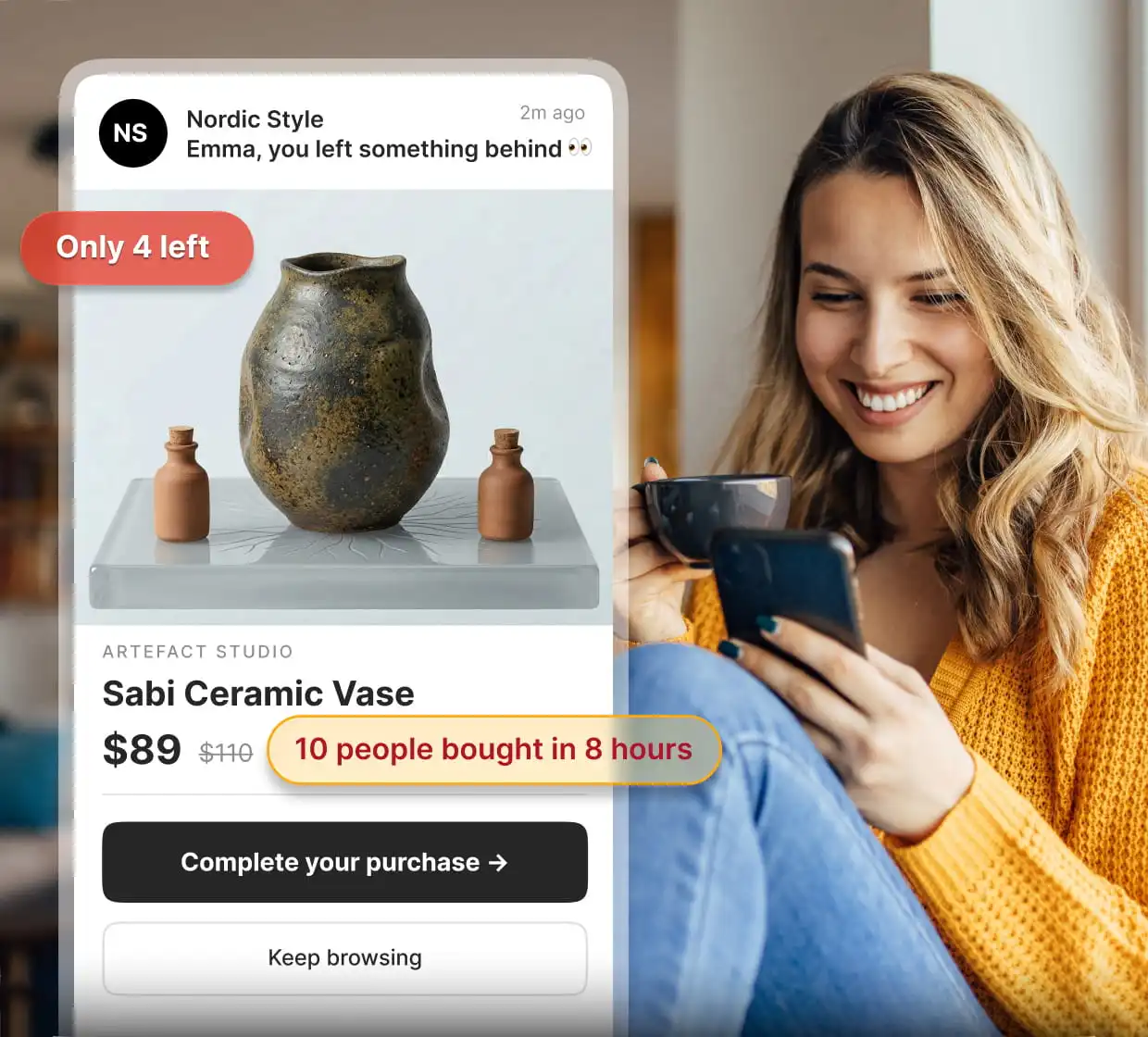
TL; DR Ecommerce Personalization

- Companies excelling in personalization generate a 5–15% revenue lift, with some generating up to 40% more revenue from personalization alone (McKinsey).
- Personalization can reduce customer acquisition costs (CAC) by up to 50% by delivering more relevant experiences that convert faster.
- 71% of consumers expect personalization; 76% get frustrated when it is absent; and 78% are more likely to repurchase after a personalized experience.
- The highest-ROI ecommerce personalization strategies are AI-driven product recommendations, personalized search, and behavior-triggered email flows.
- Enterprise-scale personalization requires an AI-powered ecommerce personalization engine — rule-based systems cannot personalize across thousands of SKUs in real time.
Today’s shoppers expect experiences built for them. They expect the homepage to reflect their interests, the search results to anticipate their intent, and the product recommendations to feel curated especially for them.
One-size-fits-all ecommerce experiences no longer cut it. Retailers who fail to personalize are losing revenue to competitors who do. That’s a costly gap to leave open.
Ecommerce personalization is one of the highest-ROI levers available to retail teams looking to increase conversion rates, average order value, and revenue per visitor.
In this guide, we’ll cover everything your ecommerce team needs to know about personalization, along with the ecommerce personalization examples that drive measurable results.
If you’re curious where your site is currently losing revenue, start with a quick teardown to uncover hidden opportunities across discovery, recommendations, and checkout.
What is Ecommerce Personalization?
E-commerce personalization is the practice of tailoring the online shopping experience for individuals based on their browsing behavior, purchase history, location, and data. These include personalized products and content recommendations, search results, promotions, and marketing messages.
Rather than showing every visitor the same homepage, search results, or product grid, personalization engines use real-time data and AI to deliver experiences that feel relevant to each person.
From the moment a shopper lands on your site, personalization takes effect from product discovery and consideration through checkout and post-purchase. When done well, it helps shoppers find products they love faster, reducing friction and earning repeat purchases.
The Role of AI in Ecommerce Personalization
Modern ecommerce personalization is powered by AI and real-time decisioning, not just manual, rule-based logic.
AI-driven personalization engine analyzes signals across every touchpoint: browsing, search, clicks, add to cart, purchase, and returns.
These signals feed machine learning models that improve their ability to predict what each shopper is most likely to want next.
Unlike traditional ones, an AI ecommerce personalization platform has three
- It personalizes for anonymous and new visitors using contextual signals and product attributes.key advantages:
- It updates recommendations dynamically within a session. If a shopper shifts from running shoes to trail boots mid-visit, the recommendations will also change.
- It optimizes for business outcomes rather than just product relevance. It focuses on what drives revenue, learning over time what leads to more conversions, higher order value, and better margins.
At the enterprise level, this is only possible with AI ecommerce personalization. No rule engine or merchandising team can manually personalize for every shopper across thousands of SKUs.
Manual vs AI Personalization:
Rule-Based Engine
- Static rules, manually set
- Cannot personalize anonymous visitors
- Recommendations fixed mid-session
- Optimizes for relevance only
- Breaks at scale (1,000s of SKUs)
AI-Driven Personalization
- Learns dynamically from behaviour
- Personalizes from first click, no history needed
- Updates in real-time as shopper intent shifts
- Optimizes for revenue: AOV, conversion, margins
- Built for enterprise scale — millions of shoppers
Benefits of Personalization in Ecommerce
When done right, ecommerce personalization delivers significant lift across key metrics, including conversion rate (CTR), average order value (AOV), revenue per visitor (RPV), and customer lifetime value (CLV).
According to McKinsey, companies that excel in personalization see a 5–15% revenue lift, with some generating up to 40% more revenue from personalization alone. These are gains worth optimizing for.
Personalization also improves efficiency across the funnel. It can reduce customer acquisition costs (CAC) by up to 50% by providing more relevant experiences that convert faster.
At the customer level, the impact is equally clear:
- 71% of consumers expect personalization
- 76% get frustrated without them
- 78% are more likely to repurchase after a personalized experience
Revenue lift from personalization
Source: McKinsey

5-15%
Consumers expect personalization
71%
Get frustrated without it
76%
CAC reduction possible
50%
Personalization also helps prevent revenue leakage across the customer journey.
It improves product discovery, reducing bounce rates for new visitors who cannot find relevant products.
It also helps prevent cart abandonment by surfacing the right cross-sell and upsell opportunities at checkout.
After purchase, personalization strengthens retention through targeted follow-ups that bring customers back for products that complement what they already bought.
For Chief Digital Officers and VP-level ecommerce leaders, the takeaway is simple: personalization is a core revenue lever.
Find Hidden Revenue Opportunities in Your Ecommerce Experience
Many ecommerce sites lose revenue daily due to generic experiences, ineffective product discovery, and missed cross-sell moments.
We are offering a free RPV Lift Teardown, in which we’ll analyze your site to identify exactly where revenue is leaking.
You’ll receive annotated screenshots of missed opportunities and a 90-day personalization uplift plan for FREE.
6 Ecommerce Personalization Strategies and Use Cases
What specific strategies should enterprise ecommerce teams prioritize?
Personalization spans every customer touchpoint, but not all tactics are equally impactful.
We’re shortlisting the six most practical and proven types of personalization in ecommerce we have seen that drives results.
1. Real-time Website Personalization across the Customer Journey
Every page of your ecommerce store can be personalized. Real-time website personalization dynamically adapts the product page, category page, checkout page, and thank-you page, including banners and promotional content, for each visitor.
Personalization for each visitor is based on their behavioral profile, lifecycle stage, and contextual signals such as location and device.
Below are some of the tactics you should launch on your store:
- Personalized homepages that reflect each shopper’s category preferences and browsing history, instead of static merchandised content for everyone.
- Dynamic banners and ecommerce content personalization that respond to shopper intent. For instance, surfacing a running shoe promotion to a visitor browsing athletic footwear, rather than a generic seasonal campaign.
- Geo-targeted content that adapts to location. This is especially relevant for retailers with regional inventory or localized promotions.
- Personalized category pages where product order, featured items, and filters are based on an individual’s preference rather than generic merchandising rules.
- Personalized on-site search results ranked by relevance to each shopper’s history and intent.
The cumulative effect of personalization across these touchpoints is a site that feels purpose-built for each visitor.
2. AI-Driven Product Recommendations That Increase AOV and RPV
Product recommendations are the most widely recognized form of ecommerce personalization. When done well, AI-driven recommendations are among the highest-ROI personalization investments observed by ecommerce teams.
Some of these recommendation strategies include:
- “Customers also bought” and “Frequently bought together” widgets that increase basket size.
- “Recently viewed” carousels that help shoppers return to products they’ve shown interest in.
- “Recommended for you” placements on the homepage, category pages, and PDPs that reflect individual taste and purchase history.
- Product bundles based on affinity data, presenting complementary items together to increase AOV.
Modern AI recommendation engines like Recommend™ go beyond traditional collaborative filtering.
Personalization software uses attribute-based models, merchandising goals, product characteristics alongside shopper preference signals to give relevant recommendations to even anonymous visitors.
3. Improve Product Discovery with Behavior-Driven Search
Search is the highest-intent touchpoint in the ecommerce journey. A shopper who uses search knows what they want, and if they don’t find it quickly, they leave.
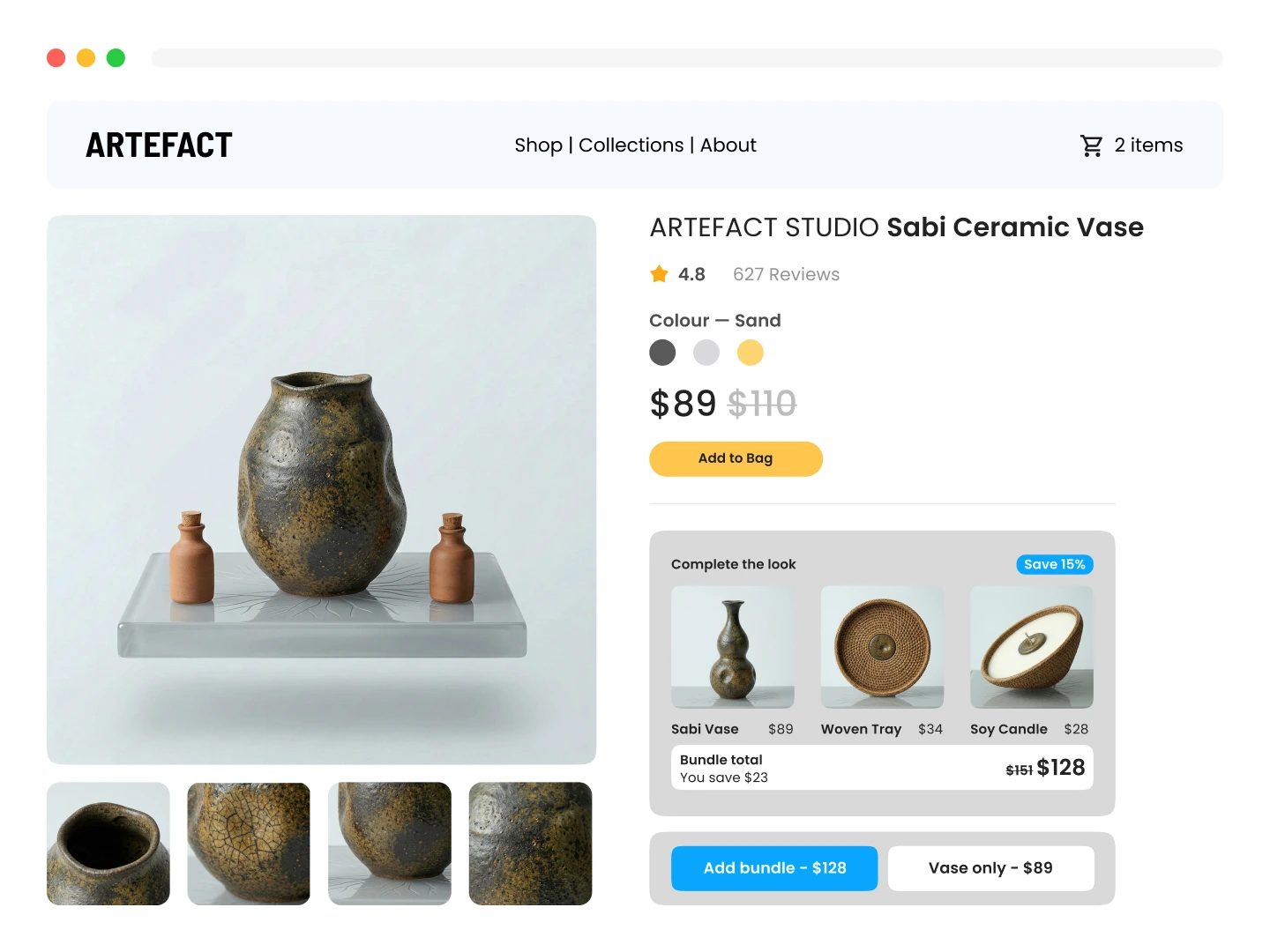
Behavior-driven ecommerce personalized search goes beyond keyword matching. It ranks results based on each shopper’s individual preference signals, such as their category affinities, brand preferences, price range behavior, and previous purchases. So the most relevant products surface at the top for each person.
For instance, a shopper who consistently buys premium brands sees premium products ranked higher. A shopper who filters by a specific size or color every session sees results pre-filtered accordingly. A loyal customer searching for “jacket” sees outerwear from brands they’ve purchased from before.
This approach also helps recover zero-result searches by showing relevant alternatives rather than showing no matches to shoppers.
The result: faster product discovery, higher search-to-conversion rates, and fewer sessions that end in frustration. You can see how Discover™ helps deliver these outcomes in practice.
4. Recover Lost Revenue with Behavior-Triggered Ecommerce Emails
A significant share of ecommerce revenue is lost when a shopper leaves without purchasing.
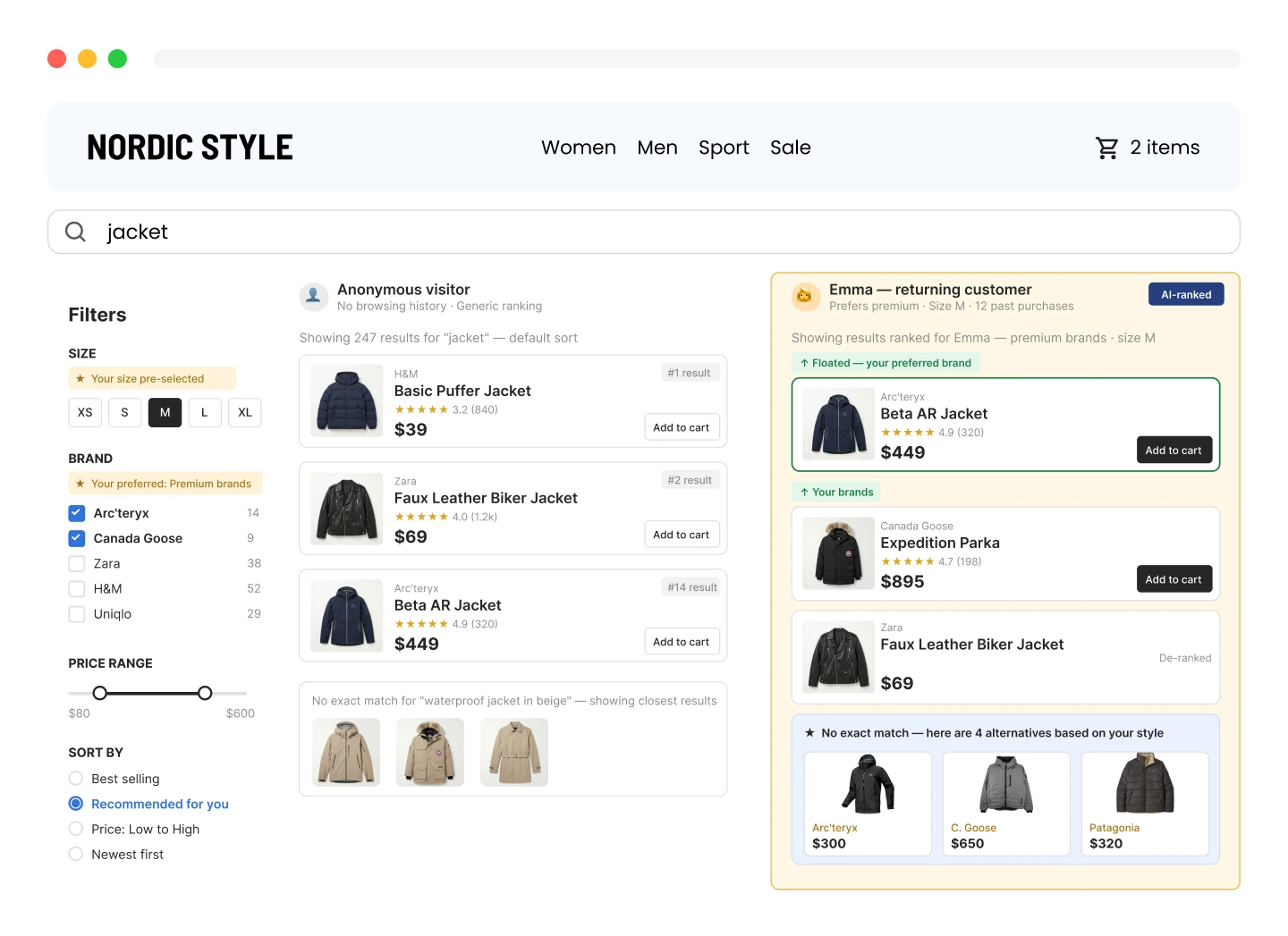
Behavior-triggered email personalization recovers that by reaching shoppers with timely, contextually relevant messages at high-intent moments.
Key triggered email flows include:
- Cart abandonment emails: Sent to shoppers who added items to their cart but didn’t complete the purchase. Including the exact products they left behind, along with updated pricing, availability, and relevant recommendations, performs far better than generic reminders.
- Browse abandonment emails: Sent when someone checks out a product or category but doesn’t add anything to their cart. It’s a way to nudge them early, while they’re still considering their options.
- Post-purchase sequences: Follow-up emails after a purchase that suggest products that go well with what they just bought. It’s a natural way to cross-sell when the customer already trusts your brand.
- Segmented campaigns: Emails tailored to different groups of customers based on what they’ve browsed or bought before. Instead of sending the same promotion to everyone, you’re sending offers that actually feel relevant.
The difference between generic email automation and personalized triggered flows is measurable: higher open rates, higher click rates, and higher revenue per email sent.
Solutions like Active Content enable this by powering real-time product recommendations, personalized messaging, and triggered campaigns across email and other channels.
5. Increase Checkout Conversions with Smart Upsell and Cross-Sell
The path from cart to completed purchase is where personalization can make a decisive difference.
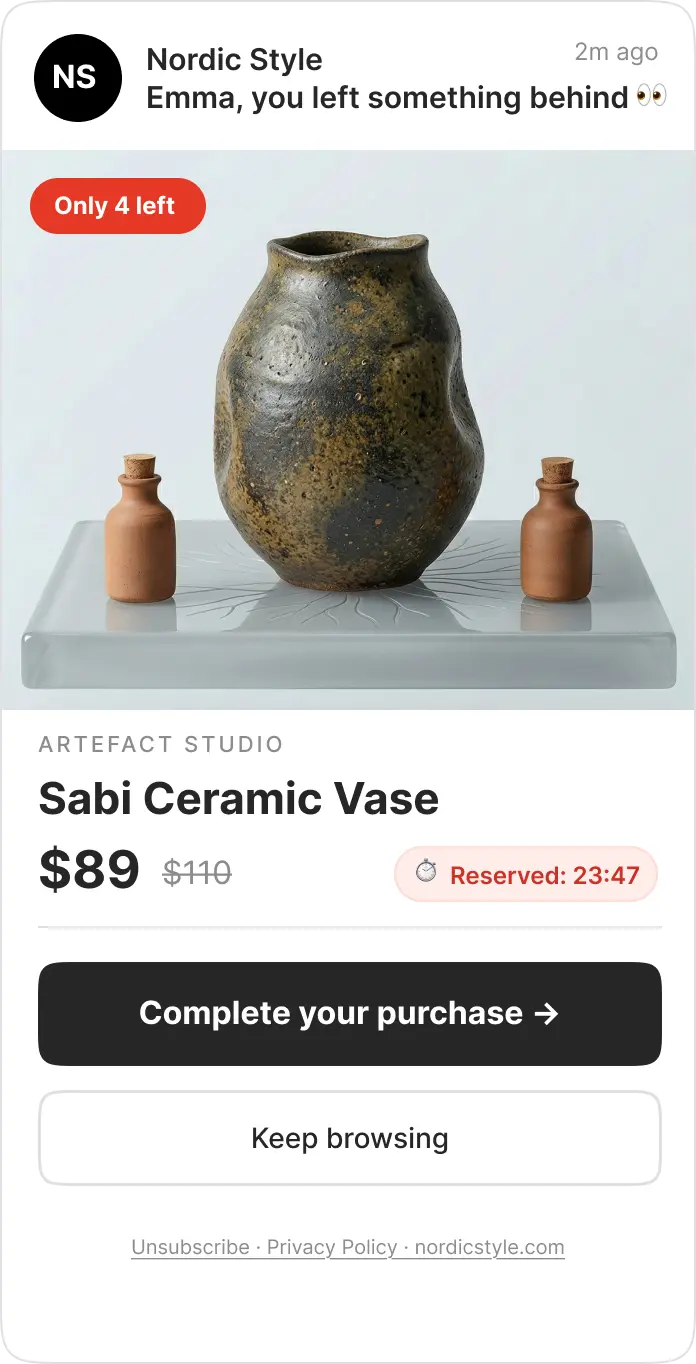
Checkout-stage personalization presents the right upsell and cross-sell opportunities at the moment of highest purchase intent.
Effective checkout personalization includes:
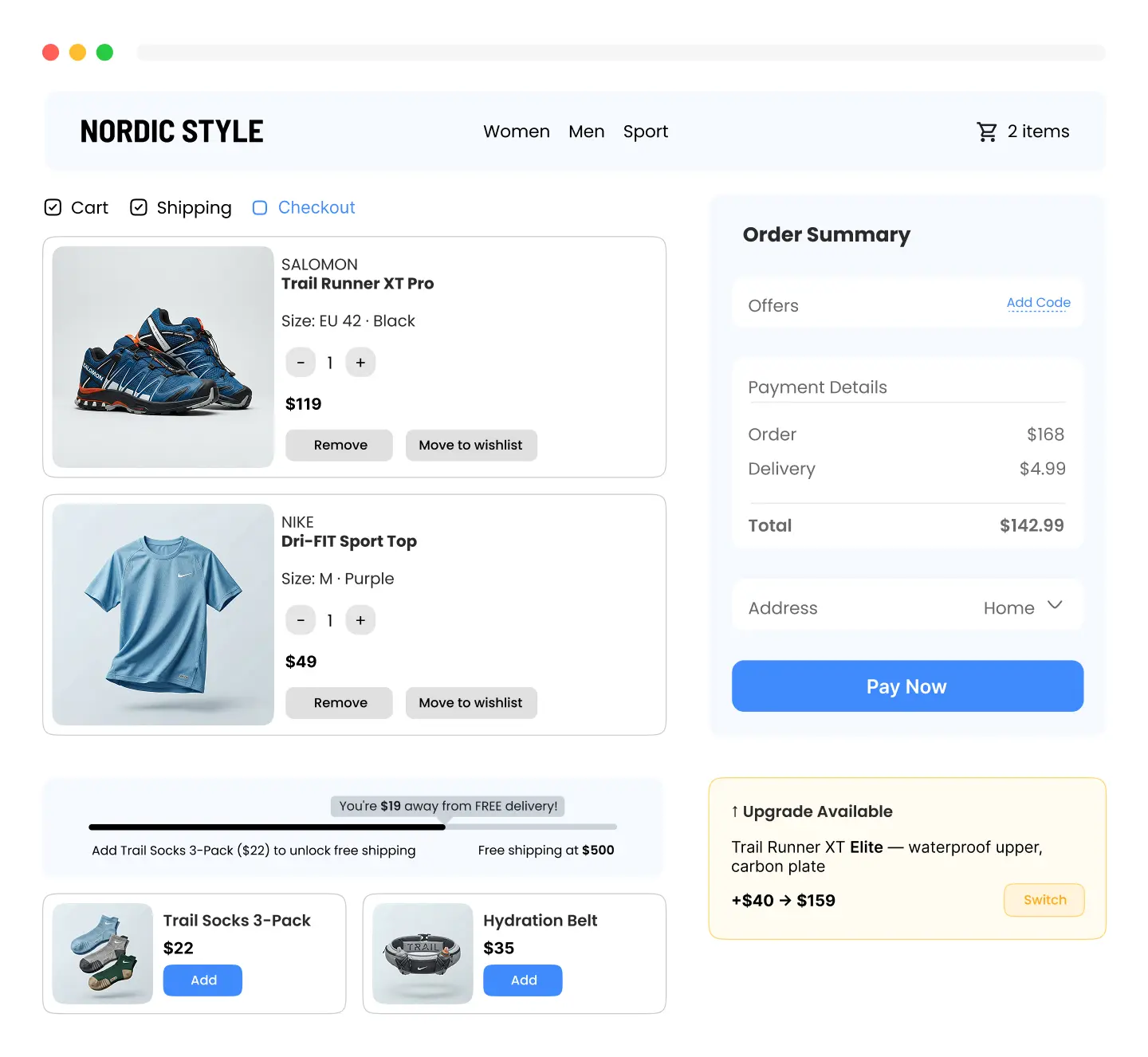
- Cart-page recommendations: Suggest products based on what’s already in the cart and what similar shoppers ended up buying.
- Upsell prompts: Highlight better or upgraded options, with a clear reason why they’re worth it.
- Saved preferences: Make checkout faster for returning customers by remembering their shipping, payment, and address details.
- Threshold messaging: Show shoppers how close they are to free shipping or a discount, nudging them to add more items.
Checkout is not the place for irrelevant recommendations. AI ecommerce personalization software like Recommend™ keeps upsell and cross-sell recommendations relevant, increasing the likelihood shoppers view them as helpful additions rather than distractions.
6. Increase Conversions with Real-Time Social Proof
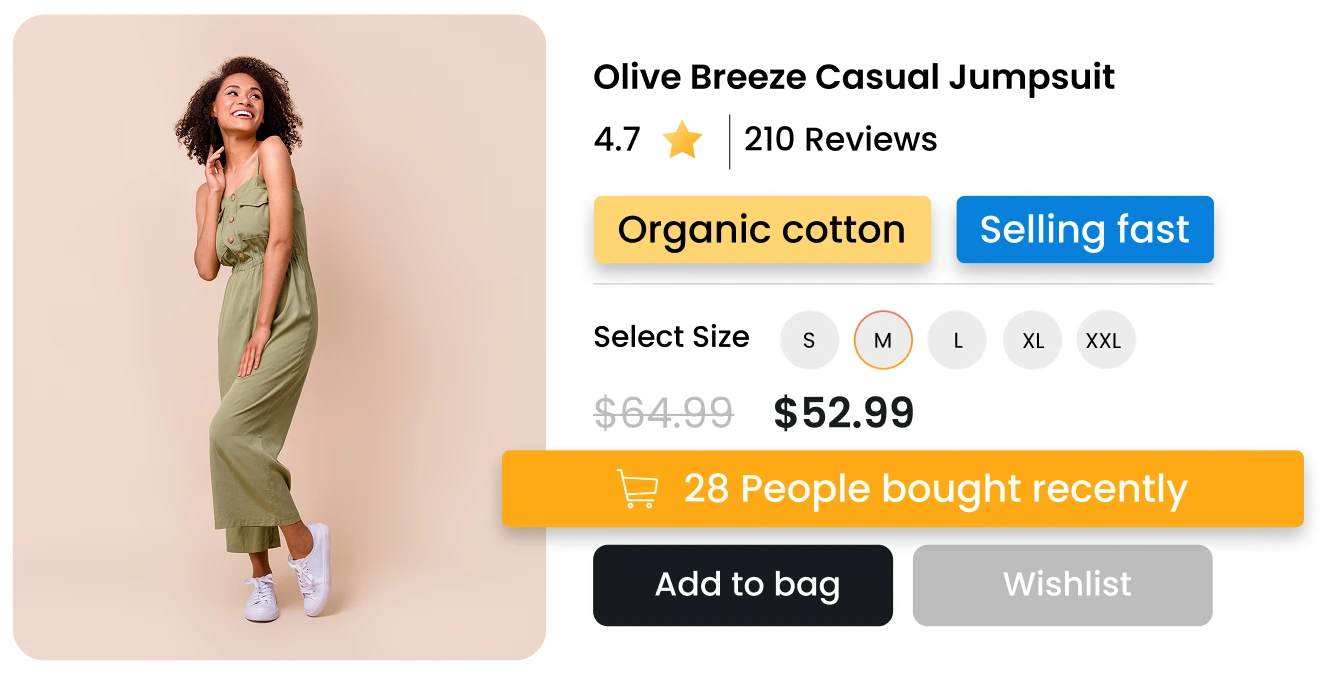
Shoppers are uncertain. They need signals that others have made this ‘right’ decision as well. Real-time social proof personalization solutions like Social Proof Messaging provides those signals dynamically, based on actual activity and inventory data.
Social proof signals that drive conversion include:
- Recent purchase notifications: “12 people bought this today” or “Sarah from London just purchased this” — real-time signals that validate a shopper’s interest.
- Trending product indicators: Surfaces where products are gaining momentum across the site, triggering FOMO for engaged shoppers.
- Low-stock alerts: “Only 3 left in your size” is one of the highest-converting urgency signals in ecommerce, but only when it’s displayed to the right shopper at the right moment.
- Rating and review highlights: Personalizing which reviews surface based on shopper profile — a first-time buyer sees trust-building reviews, a returning customer sees reviews relevant to their use case.
Checkout is not the place for irrelevant recommendations. AI ecommerce personalization software like Recommend™ keeps upsell and cross-sell recommendations relevant, increasing the likelihood shoppers view them as helpful additions rather than distractions.
Test social Proof Impact Free for 30 Days
We’re offering a free 30-day pilot to help you improve your conversion rate using social proof messaging.
We’ll audit your ecommerce website, identify where you’re losing revenue, and put high-impact urgency or trust widgets. No heavy IT effort required.
You get measurable results within weeks, with zero upfront commitment.
Real-World Ecommerce Personalization Examples
Matas Grew Attributable Sales by 36% with Personalized Recommendations
The Situation:
Matas, a leading Scandinavian health and beauty retailer, wanted to improve how shoppers engaged with its product catalog and increase the effectiveness of cross-sell and upsell opportunities.
What they did:
Matas implemented personalized product recommendations across key touchpoints, including product pages, category pages, cart, and checkout. These recommendations helped surface relevant products based on shopper behavior and context.
The Result:
Personalized recommendations drove 36% growth in attributable sales, along with increased engagement and order value from recommendation-driven interactions.
Stadium Drives +17% RPV with Social Proof Messaging
The Situation:
Stadium, a leading Nordic sports and outdoor retailer, was already using personalization and wanted to further improve conversion and customer experience by making its site more responsive to real-time shopper behavior.
What they did:
Stadium implemented social proof messaging across product pages, highlighting real-time signals like trending products, popular items, and recent purchases. These messages were triggered by shopper activity, such as views, add-to-carts, and purchases, and were continuously tested and optimized to improve performance.
The Result:
This led to a 17.3% increase in RPV, along with improvements in conversion rate and add-to-cart rate, driven by more relevant, behavior-based messaging.
Wine.com Increased Revenue per Click with Attribute-Based Product Recommendations
The Situation:
Wine.com, a leading online wine retailer, wanted to improve the relevance of its product recommendations, particularly for new products and shoppers with limited browsing or purchase history.
What they did:
Wine.com implemented attribute-based product recommendations that use product data, such as varietal, region, and price, to deliver more relevant recommendations across the site. This approach helped surface a broader range of products to more shoppers, including those without prior behavioral data.
The Result:
This led to improved recommendation performance and increased revenue per click (RPC) from recommendation placements, driving stronger engagement with recommended products.
How to Choose the Right Ecommerce Personalization Strategy
Not all personalization strategies deliver equal value for every retailer. The right approach depends on your business objective, product assortment, customer behavior, and where your greatest revenue opportunities lie.
Here’s how to think through the decision:
Align with your revenue goals
Start with the metrics you want to improve. Different personalization strategies have different primary impacts.
For instance, if RPV is your focus, real-time on-site personalization and social proof are high-leverage starting points.
If AOV is the priority, recommendation-driven cross-sell and checkout upsell deserve early attention.
Prioritize high-impact journeys
Not every touchpoint has equal revenue potential. Product discovery, recommendations, and cart recovery bring the highest ROI in personalization. They sit closest to the purchase decision. Start there, prove ROI, then expand.
Consider your vertical
The right personalization strategy varies meaningfully by product category.
For instance, high-frequency, consumable categories (grocery, health, and beauty) benefit most from purchase-pattern personalization and replenishment triggers.
Whereas, high-consideration, low-frequency categories (furniture, consumer electronics) benefit more from browse-based recommendations and social proof that reduces purchase anxiety.
Fashion requires strong attribute-based modeling to handle seasonal catalog turnover and style affinity.
Plan and choose a platform built for scale
The personalization strategies that work for 10,000 monthly visitors need to be architected differently for 10 million.
Enterprise SaaS personalization platforms from Algonomy are purpose-built to ingest behavioral signals, run real-time ML inference, and serve individualized experiences at scale — with pre-built connectors to major ecommerce platforms, CDPs, and email providers that reduce integration risk and time-to-value.
This is not something rule-based tools, homegrown solutions, or stitched-together point solutions can reliably deliver.
Test, measure, and scale
The retailers that build lasting personalization advantages treat it as an ongoing experimentation program, not a one-time implementation.
Run tests on recommendation placements, messaging, and algorithms. Measure RPV, not just CTR. Scale what wins and deprioritize what doesn’t.
Start with a Free RPV Lift Teardown from Algonomy
Most ecommerce teams know personalization matters, but identifying where revenue is actually leaking and which strategies will close those gaps requires a level of diagnostic depth that most teams don’t have in-house.
Algonomy’s RPV Lift Teardown is designed to answer that question in concrete, actionable terms.
Algonomy’s team analyzes your ecommerce site to surface exactly where generic experiences are costing you revenue.
We’ll show you where you’re missing revenue, whether it’s underperforming recommendations, missed cross-sell opportunities, or gaps in product discovery.
You’ll get a clear breakdown of the highest-impact opportunities, along with a prioritized 90-day plan tailored to your business and shoppers.
Find and Fix Your Revenue Gaps
Get a data-backed 90-day roadmap to improve conversion, AOV, and revenue per visitor on your ecommerce site.

Ecommerce Personalization FAQs
1. What is ecommerce personalization?
Ecommerce personalization is the practice of dynamically adapting the online shopping experience, including product recommendations, content, search results, and messaging to each individual shopper based on their behavior, preferences, and context. The goal is to make every shopper’s experience feel relevant and tailored to them, rather than generic.
2. How does AI enable ecommerce personalization?
AI makes it possible to personalize experiences at a scale and speed that manual rules can’t match by analyzing how shoppers browse, search, and interact in real time, then predicting what each person is most likely to want next. As more data comes in, it continuously improves, and it can also deliver relevant experiences for new visitors and new products where there isn’t much historical data yet.
3. What are the most impactful ecommerce personalization strategies?
The highest-ROI personalization strategies for most retailers are AI-driven product recommendations, personalized search, and behavior-triggered email flows. Social proof and checkout personalization also deliver strong results with relatively fast implementation timelines.
4. How long does it take to see results from ecommerce personalization?
Results timelines vary by strategy and platform. With Algonomy, social proof messaging and urgency widgets can be deployed and deliver measurable conversion lift within 30 days. More comprehensive recommendations and search personalization programs typically show significant results within 60–90 days of going live, as AI models build behavioral data on your shopper base.
5. How is ecommerce personalization different from segmentation?
Traditional segmentation groups shoppers into broad buckets (e.g., “women aged 25–34 who purchased in the last 90 days”) and delivers the same experience to everyone in that group. True personalization delivers a unique experience to each individual, adapting in real time based on what that shopper is doing right now, not just their demographic profile.
6. What data does ecommerce personalization use?
Personalization engines use a combination of behavioral, contextual, and product attribute data. First-party behavioral data collected on your own site is the most valuable input, making it critical to have robust data collection and a personalization platform that can act on it in real time.
7. Can personalization work for anonymous visitors?
Yes. Modern personalization platforms use in-session behavioral signals — what a visitor searches for, clicks, and browses during a single session — to serve relevant recommendations and content even before a historical profile has been built. Attribute-based recommendation models are particularly effective for anonymous visitors.
8. How do I measure the ROI of ecommerce personalization?
The most reliable measurement approach is to track include revenue per visitor (RPV), conversion rate, average order value (AOV), click-through rate on recommendations, and attributable revenue.