


A decade ago, email personalization felt like progress if you could do two things well: address the customer by name and swap in a few product recommendations based on purchase history.
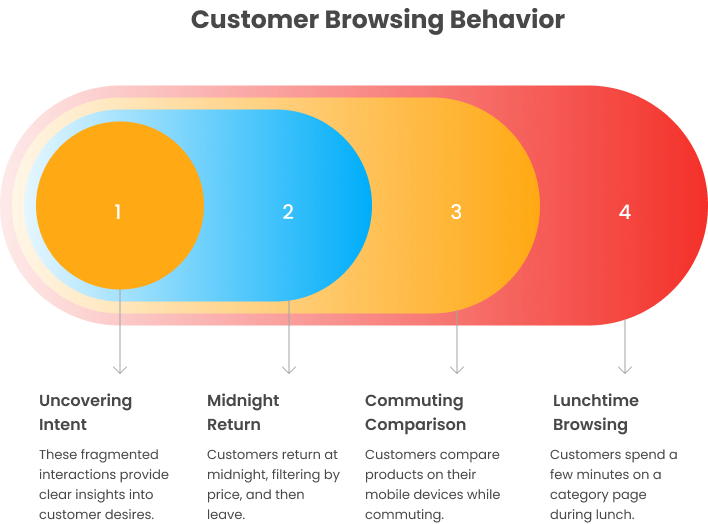
Customers browse in short, fragmented sessions, such as a few minutes on a category page during lunch, comparing products on mobile while commuting, or filtering by price late at night. These actions are not captured in purchase history, yet they often provide the clearest insight into future intent. As a result, leveraging browsing behavior has become essential for growth teams. Browsing behavior reflects intent, which can quickly expire.
If your email arrives after that intent has cooled, or if it reflects what the shopper cared about yesterday rather than what they care about at open time, you get what most retailers are seeing right now: decent deliverability, acceptable open rates, and a slow leak in click and conversion rates.
This is also the moment when marketers start searching for email personalization tools that can go beyond segmentation and send-time rules, and actually keep content relevant in motion.
A common misconception is that the challenge is creative. In reality, most email programs still function like print: content is finalized and static at send. However, browsing behavior changes frequently.
So the question arises
How do you build an email that behaves like a live digital touchpoint?
Why Browsing Behavior is the Highest Leverage Personalization Signal in Retail Email
Most retailers already personalize with name, location, or past purchases. Those are useful, but they have two limitations:
- They change slowly
- They do not always reflect the shopper’s current intent
Browsing behavior is different. It is fresh, contextual, and predictive.
A shopper who has viewed formal wear multiple times and compared brands within a week is often closer to purchasing than someone who bought formal wear months ago. Browsing behavior captures micro-intent, such as category interest, emerging brand preferences, price sensitivity, and decision friction.
Browse abandonment emails are effective because browsing activity signals intent, even at earlier stages than cart abandonment.
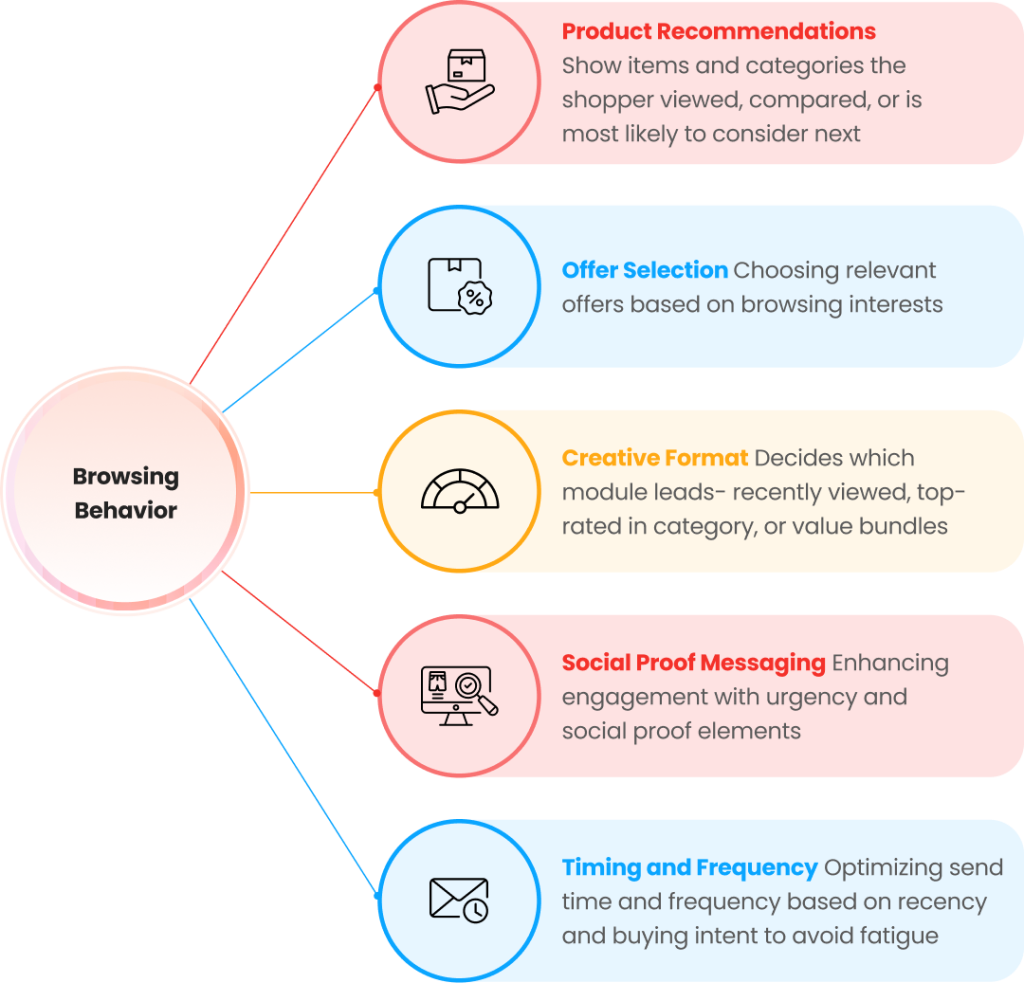
Framework for Turning Browsing Behavior into Email Personalization that Converts
The following framework helps retail teams shift from tracking behavior to monetizing it.
Step 1: Define the browsing signals that matter
Not every click deserves an email. Start with signals that show intent or friction:
- Product views: repeat views, high dwell time, comparison behavior
- Category views: repeated exploration of a category without purchase
- Search behavior: high-intent queries (brand + product type), ‘size’ searches, ‘near me.’
- Browse abandonment: product or category viewed, then the session ends with no cart
- Engagement recency: last browse within 24–72 hours (or category dependent)

Product views

Category views

Search behavior

Browse abandonment

Engagement recency
Step 2: Map signals to the right email moments
A common mistake is treating browse and cart abandonment as the same. They are not. Browse abandonment needs lighter friction and more inspiration.
A simple mapping that works well:
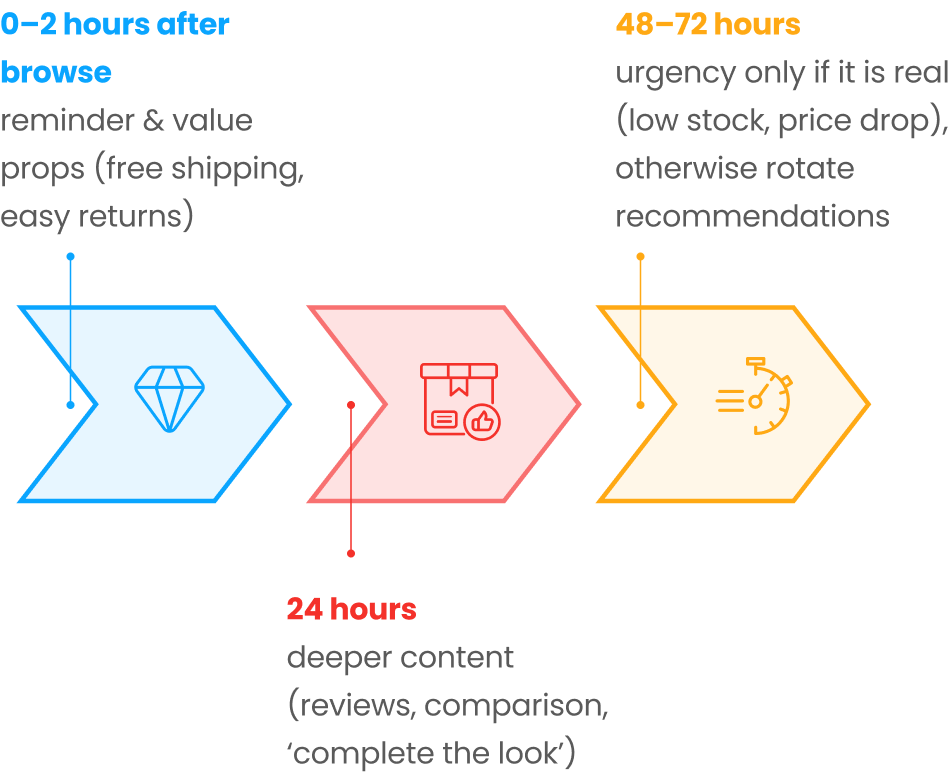
Industry best practices for browse abandonment follow this cadence: begin with a gentle reminder, then provide stronger proof or incentives in subsequent messages.
Step 3: Decide what content should be dynamic
Many programs plateau at this stage, personalizing only subject lines while keeping the email body static.
Instead, identify modules that should update at open time:
- Recently browsed products (or category)
- Price and discount status
- Inventory level or availability
- Ratings and reviews
- Store proximity or fulfillment options
- Personalized recommendations as per browsing behavior
Step 4: Enrich browsing behavior with context
Browsing behavior indicates what action is needed, while context reveals the underlying objective.
Effective personalization combines browsing behavior with loyalty status, location or nearest store, price sensitivity, lifecycle stage, product attributes, and social proof.
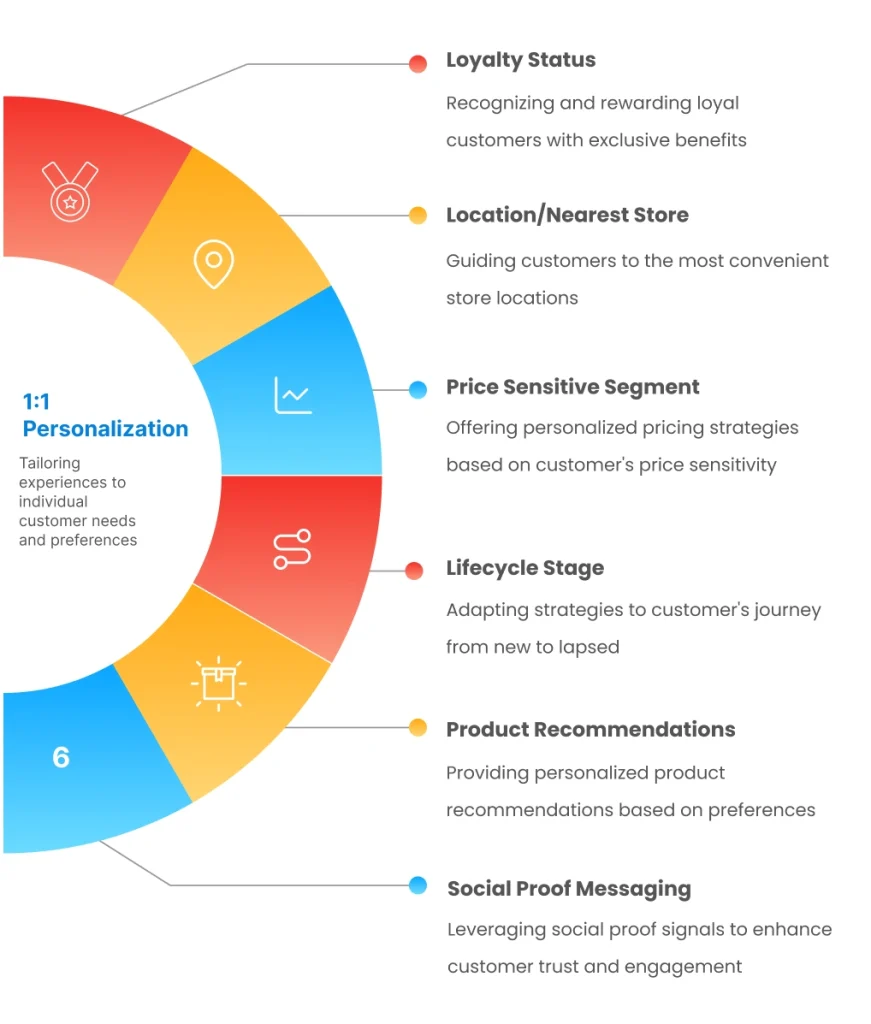
Many email personalization tools struggle at this stage because relevant data is distributed across multiple systems, including CDP, product catalog, reviews, inventory, loyalty, promotions, and recommendations.
Where Most Email Personalization Tools Fall Short
Searching for “email personalization tools” yields many lists, but these often conflate two categories:
- Tools that help write personalized copy (often for sales outreach)
- Tools that personalize the customer experience in retail (data-driven content, recommendations, dynamic modules)
For retail growth, focus on the second category.
While many marketing automation platforms can segment and trigger emails, advanced dynamic content often requires additional development, complex integrations, or custom templates. This gap highlights the value of open-time and dynamic module approaches. When evaluating email personalization tools, prioritize operational capabilities over feature checklists.
How Algonomy’s Active Content Operationalizes Browsing Behavior at Scale
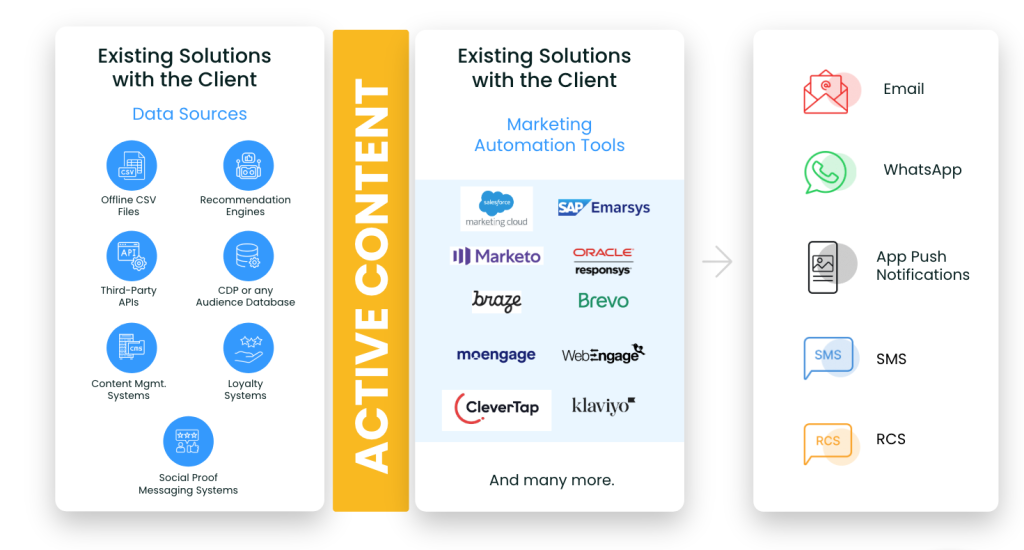
Algonomy’s Algonomy Active Content delivers hyper-personalized marketing content across email, WhatsApp, and SMS by dynamically assembling content from multiple data sources and rendering the most relevant version when the customer interacts. This bridges the gap between browsing behavior and actionable creative.
Open-time personalization: Content updates when the email is opened, preventing stale pricing, sold-out items, or outdated recommendations.
Generative AI: Powered by Generative AI and Algonomy’s decisioning engine, Active Content precisely tailors each message for the individual and integrates seamlessly with existing MarTech stacks.
Multi-source data stitching: Combine browse events from your CDP, product data from your catalog, offers from your promotions engine, reviews from third-party APIs, and inventory from your OMS into a single, consistent, and current email module.
Reusable creative logic: Build a browse personalization module once and reuse it across segments, regions, and campaigns without recreating templates.
In Conclusion
Browsing is now the most time-sensitive signal in retail marketing, as customers explore in short bursts, switch devices, and change preferences quickly. Browsing behavior functions more as a live intent feed than traditional engagement data.
Successful brands treat browsing intent with discipline, interpret it thoughtfully, avoid over-personalization, and ensure content remains accurate when the customer opens the message. Relevance now depends on real-time accuracy, not just information available at send time.
This marks the shift from personalizing emails to personalizing the entire experience. When evaluating email personalization tools, prioritize platforms that convert behavioral signals into open-time, multi-source, no-code dynamic content that aligns with customer intent and powers hyper-personalized email campaigns.
FAQs
1) What is the role of browsing behavior in email personalization beyond browse abandonment?
Browsing behavior can power category-affinity campaigns, product-comparison messaging, price-drop alerts, back-in-stock journeys, and loyalty nudges. It is a real-time intent signal, not just a trigger.
2) How do email personalization tools use browsing behavior safely without feeling creepy?
Use restraint and relevance: limit frequency, avoid overly specific language (“we saw you do X”), and focus on practical utility like reviews, availability, and curated alternative guides. Recommend balancing personalization with customer comfort and privacy expectations.
3) What should I look for in email personalization tools if I want to use browsing behavior well?
Prioritize open-time personalization, the ability to stitch data from multiple systems (CDP, catalog, inventory, reviews, loyalty), and marketer-friendly workflows that reduce IT dependency.”