


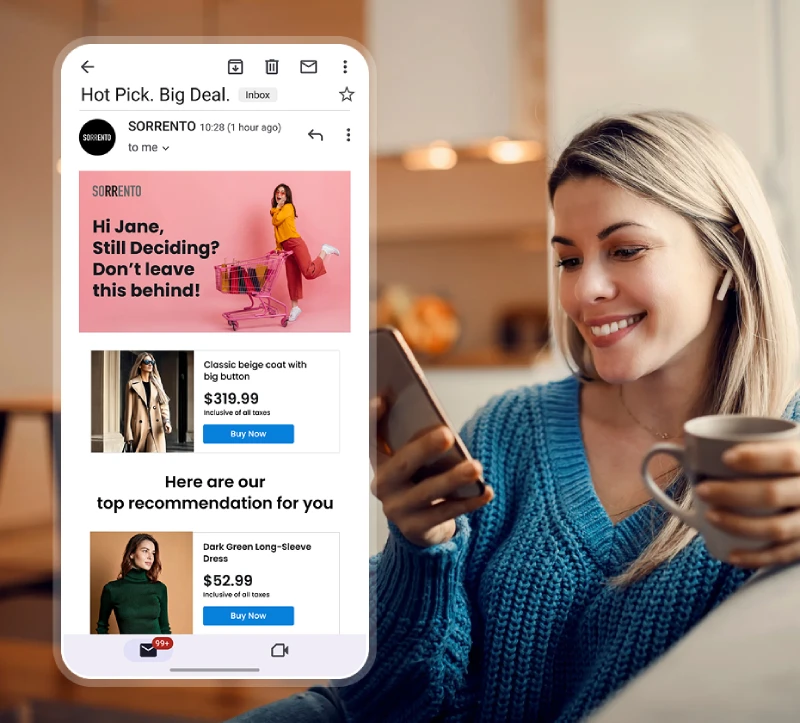
If you’ve ever looked at a campaign report and thought, “The offer was good, the creative was solid, why didn’t this land?” you’re not alone.
The challenge in retail is usually not the message itself, but the timing. Customers open emails when it suits them, not when you send them. By then, key details such as availability, price, urgency, and pickup options may have changed.
Email personalization is about staying relevant when the customer opens the email. This is where Recommendation Engine-powered personalization with Active Content stands out. Recommendation Engine helps pick the best products or messages for each shopper, and Active Content updates the email at open, keeping it accurate and up to date.
In other words, you’re not trying to make emails smarter for the sake of it. You’re trying to make them dependable. When what the customer sees in the inbox matches what they see on the site, right now clicks turn into confident clicks, and confident clicks turn into revenue.
Why Generic Personalization Stops Working in Retail
Most retail teams already personalize emails by using customer names, broad segments, and automated journeys like welcome, browse abandonment, and cart abandonment. These methods still help, but they are just the starting point.
The real issue isn’t personalization itself. It’s about getting the timing and accuracy right.
Retail moves quickly. Products sell out, prices change, and promotions update. A shopper’s intent can shift after just one browsing session. If your email content is set when you send it, it can quickly become outdated. When that happens, even a personalized email can feel generic.
Today’s shoppers compare your emails to their experience on your website. Online, you show what’s in stock, current prices, and recommendations based on recent activity. Your emails need to meet that same standard.
Active Content is built for that reality. Instead of treating email as a fixed design, Active Content lets you use dynamic content blocks that can update at open. This is especially useful in retail, where ‘what is true right now’ drives conversion.

Rethinking Email Personalization in 2026
Every retail email has three decisions hiding inside it:
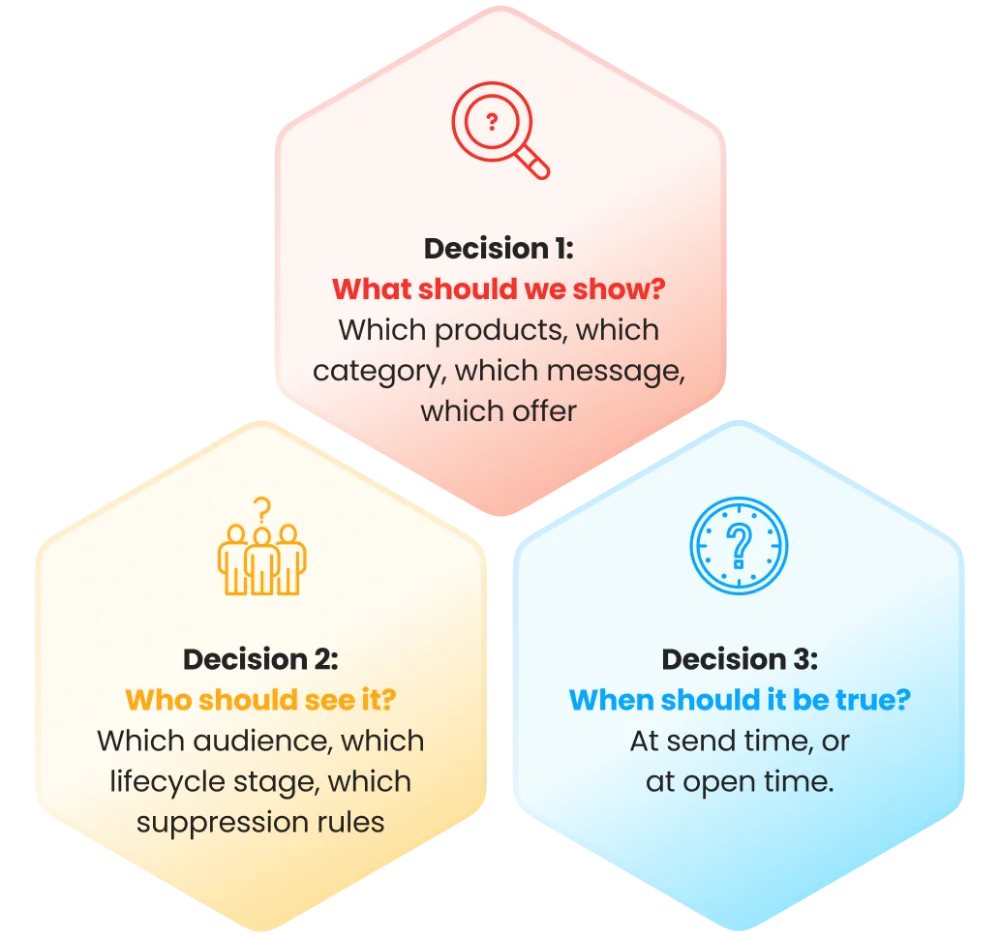
Most brands focus on the first two decisions and assume the third will work out on its own. But it doesn’t.
This is where Recommendation Engine-powered email personalization comes in. A Recommendation Engine can help with the first decision for each individual. Instead of picking one set of products for an entire segment, it can choose the right mix or message for each shopper, using signals such as browsing history, past purchases, price sensitivity, and channel engagement.
Active Content supports the third decision. It ensures the email matches what’s true when the shopper opens it. It can handle:
- Open-time rendering of product content
- Inventory and price-aware messaging
- Store pickup and nearest store inventory
- Deadline and countdown modules that remain accurate
- Personalized content blocks driven by customer profile and behavior
Strategies that Make Email Personalization Feel Human
Strategy 1: Make cart and browse emails accurate, not just automated
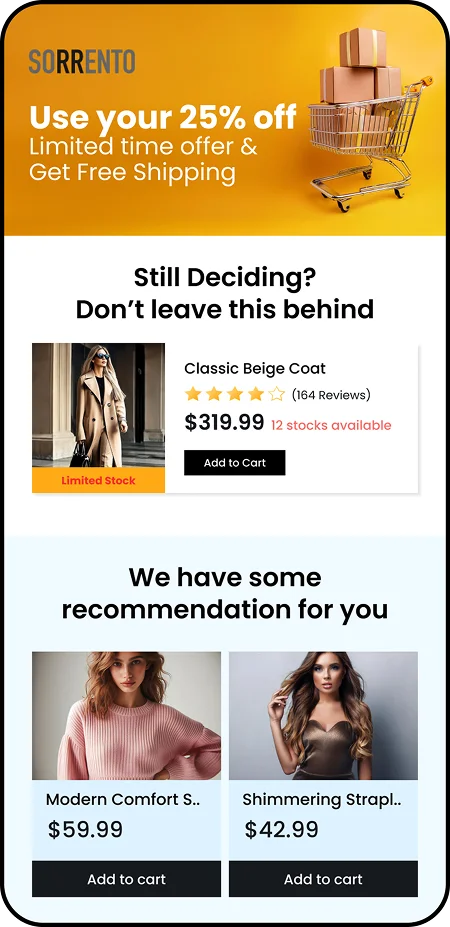
Cart and browse abandonment campaigns work well because they match real customer intent. But they can fail if the product sells out, the price changes, or the customer already bought the item.
With Active Content, recovery messages are more robust. The product block checks availability when opened, and if an item is out of stock, it can show a similar item or the store’s availability. With Active Content, abandoned cart emails are improved with inventory data, social proof, reviews, and recommendations.
Strategy 2: Leverage urgency in a clean, honest way
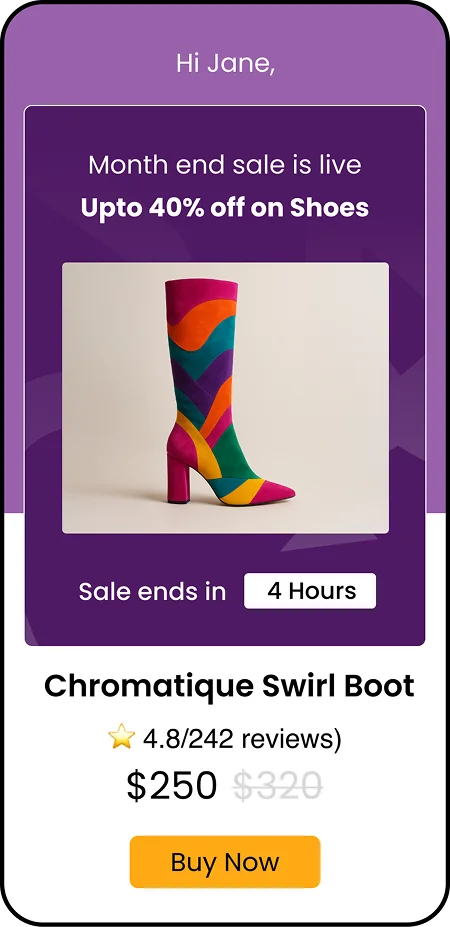
Retailers use urgency to drive action, but customers dislike fake urgency.
A countdown timer works well when it’s tied to a real deadline, such as a sale ending, a shipping cutoff, a store event, or limited-time access. But it only helps if it’s accurate when the email is opened.
Active Content solves this by using a countdown block that updates when opened. This way, you avoid emails that say “3 hours left” when the customer opens them the next day.
A Recommendation Engine-powered email personalization can help here, too. Different customers respond to different motivators, some to early access, some to free shipping, and others to value. The Recommendation Engine can choose the best message to pair with urgency.
Strategy 3: Make the Email do One Convenience Job
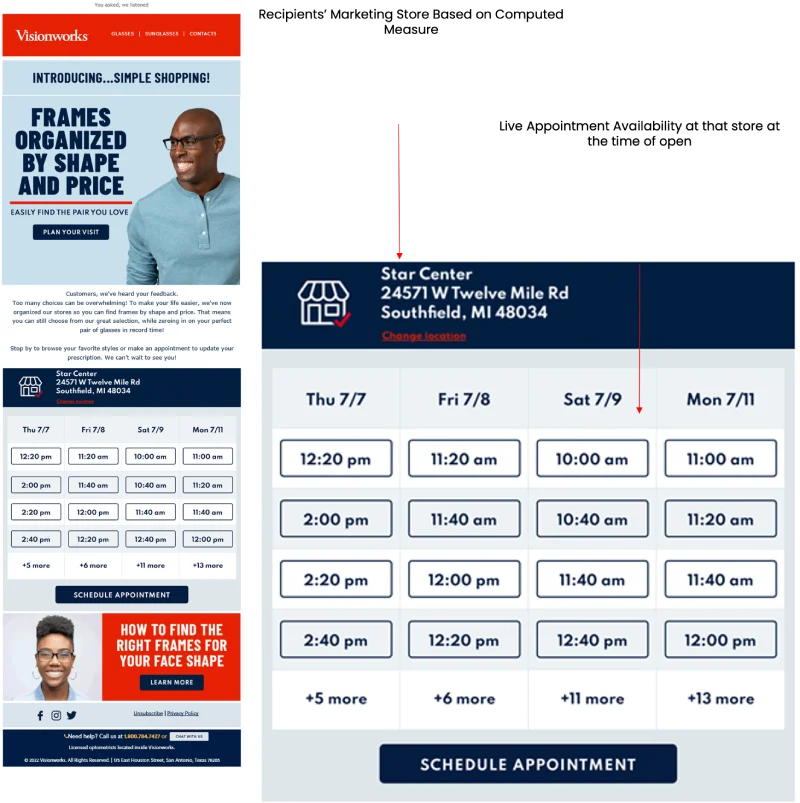
Most promotional emails try to cover everything. A simple way to improve results is to add a single convenience feature that makes things easier for customers.
In retail, the best convenience modules are often:
- Store pickup availability
- Nearest store address and hours
- Delivery ETA messaging
- Back in stock notifications
- Loyalty points or member benefit reminder
Active Content lets you show these features based on customer profile and location. The email is easier to use because it answers the “Can I get it now?” question without making the customer click.
Why Open-time Email Personalization is a Game Changer
If you change how your content is shown, you need a clear way to measure the results. Keep your metrics simple.
- Click rate and click-to-open rate
- Conversion rate from email sessions
- Revenue per email
- Revenue per click
- Downstream metrics in key journeys like cart recovery
Then add one operational metric that leadership will care about:
Time to launch: how quickly marketing can ship a campaign with personalization changes
If Active Content is doing its job, you should see two wins:
- Better relevance results (more clicks and conversions)
- Better operating results (fewer template versions, less rework, faster updates)
Our Customers Have Seen Significant Results
Higher CTR

+30%
Higher Conversions
+25%
Campaign Build Time

-90%
Personalizing Without Breaching Privacy
Retail marketers are right to be cautious about going too far with personalization. The aim isn’t to surprise customers with what you know, but to be helpful.
Checks to ensure email personalization stays customer-friendly:
 Keep personalization focused on shopping intent and convenience.
 Use clear fallbacks when data is missing.
 Avoid overly specific statements about browsing that feel invasive.
 Make sure offers, prices, and deadlines are accurate.
 Keep frequency
in check so relevance does not turn into noise.
Keep frequency
in check so relevance does not turn into noise.
Active Content helps by allowing blocks to use fallback logic. If a customer has no history, show best sellers. If you don’t know their location, skip the store module.
Conclusion
The best retail emails don’t feel like mass messages. They feel like your brand is paying attention.
That’s the real promise of email personalization in 2026: not just adding data, but making sure emails stay relevant and accurate when customers open them.
Active Content lets you use dynamic blocks in your emails, so the experience stays up to date even if the email is opened hours or days later. When you do this well, your inbox feels more like your storefront, always updated, relevant, and ready to convert.
FAQs
1) What is email personalization in retail, beyond using a first name?
Email personalization is using customer context to change what the email shows, not just who receives it. In retail, that usually means tailoring product tiles, offers, category focus, store messaging, and timing based on signals like browsing, purchase history, loyalty status, and location. The goal is simple: make the email feel relevant when he customer opens it, not just when it was sent.
2) How does Active Content improve email personalization?
Active Content enhances email personalization by enabling dynamic content blocks within the email. Instead of locking everything at send time, key sections such as product modules, offer messaging, store pickup modules, and urgency timers can be updated at open time. That helps reduce “dead clicks” caused by out-of-stock products, price changes, or expired offers, and keeps the email aligned with what the customer will see after they click.
3) How do you know email personalization is working beyond clicks?
Look for fewer dead clicks and more revenue-quality engagement: higher conversion rate from email sessions, higher revenue per email, and stronger performance in key journeys like browse and cart recovery. Active Content also helps operations, as teams can reuse dynamic blocks instead of building multiple versions, improving campaign speed without sacrificing relevance.