



Retail marketers have come a long way from batch-and-blast. Today’s emails carry first names, purchase history, and even tailored recommendations. And yet, something still feels off.
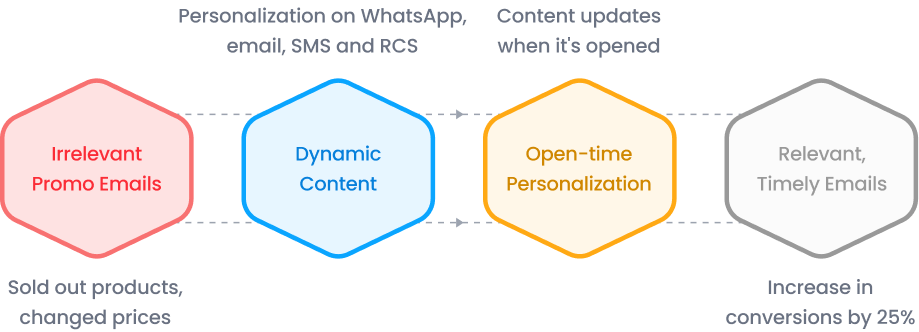
Ever opened a promo email for a flash sale only to find the product is sold out? Or clicked into a discount campaign only to realize the pricing has changed? That’s not a creative problem, it’s a timing problem.
This is where open-time email personalization comes into play. It’s when the content isn’t finalized when it’s sent, but when it’s opened. It’s a shift that moves personalization from being reactive to being relevant. Active Content is making this possible at scale.
What is open-time email personalization?
Open-time email personalization means the email content is rendered dynamically when the recipient opens it, not static at send time.
This can include:
- Showing the latest price (flash sale changes)
- Filtering out out-of-stock items from a product module
- Updating a loyalty balance visual
- Swapping the hero banner based on affinity, location, or language
- Adding social proof elements like ratings, reviews, or urgency cues based on live inputs
While traditional email is a printed flyer, open-time personalization turns the email into something closer to a web experience, with content created in real time.
Algonomy’s Active Content creates dynamic content blocks that pull from multiple sources and render at the moment of engagement, keeping the creative relevant as it’s viewed.
Why Traditional Personalization Fails
Most teams already do personalization. First-name fields, segments by gender or category, “recommended for you” modules, browse/cart triggers.
So why isn’t that enough?
Because most of it is still send-time personalization. You decide what each person sees based on what you knew at 10:00 a.m., then you hope it’s still true at 6:30 p.m.
In retail, that hope gets expensive fast.
Common Challenges Faced by CRM Teams

Stale pricing and promos
The email shows $49.99, but the site shows $59.99, or the offer has shifted. That disconnect breaks trust.

Stock-outs inside hero modules
You finally get someone to click, and the product is gone. Not only do you lose the sale, but you also waste a precious engagement moment.

Generic creative because dynamic logic is too hard
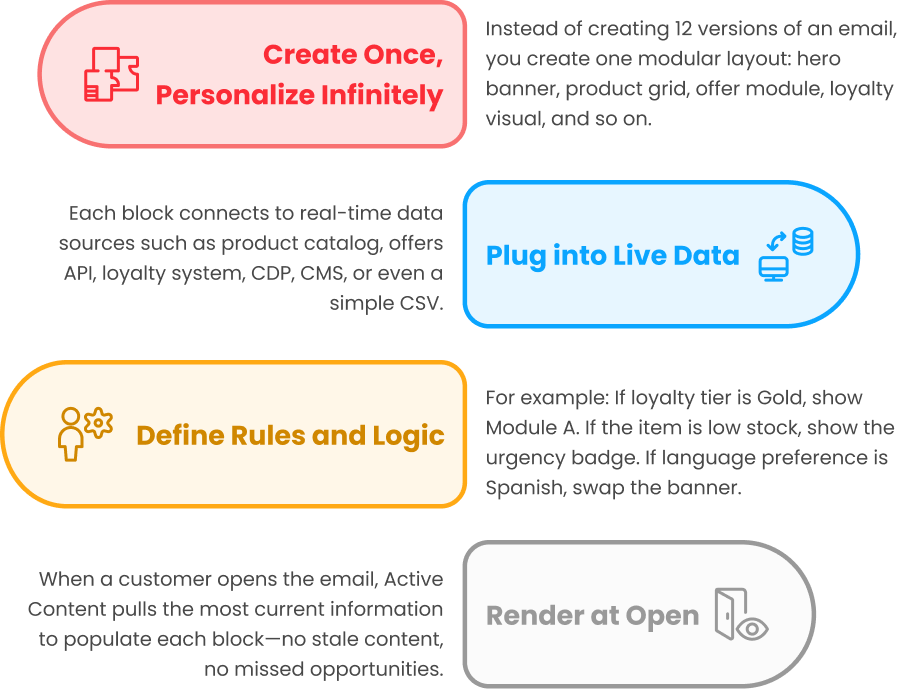
Teams default to segment-level creative because making it truly 1:1 would require too much IT, too many templates, and too much QA.

Campaign build cycles that move more slowly than the business
Retail is real-time. Your email production cycle often is not.
How Active Content Enables Open-time Personalization
Unlike most marketing automation solutions, Active Content is purpose-built to create and deliver open-time personalized content blocks across email, SMS (RCS), WhatsApp, and more.
Here’s How Active Content Works
Email Personalization Examples Retailers Can Implement
Below are email personalization examples that feel practical in a retail CRM calendar. The point is not to get fancy. The point is to stay accurate and contextually relevant.
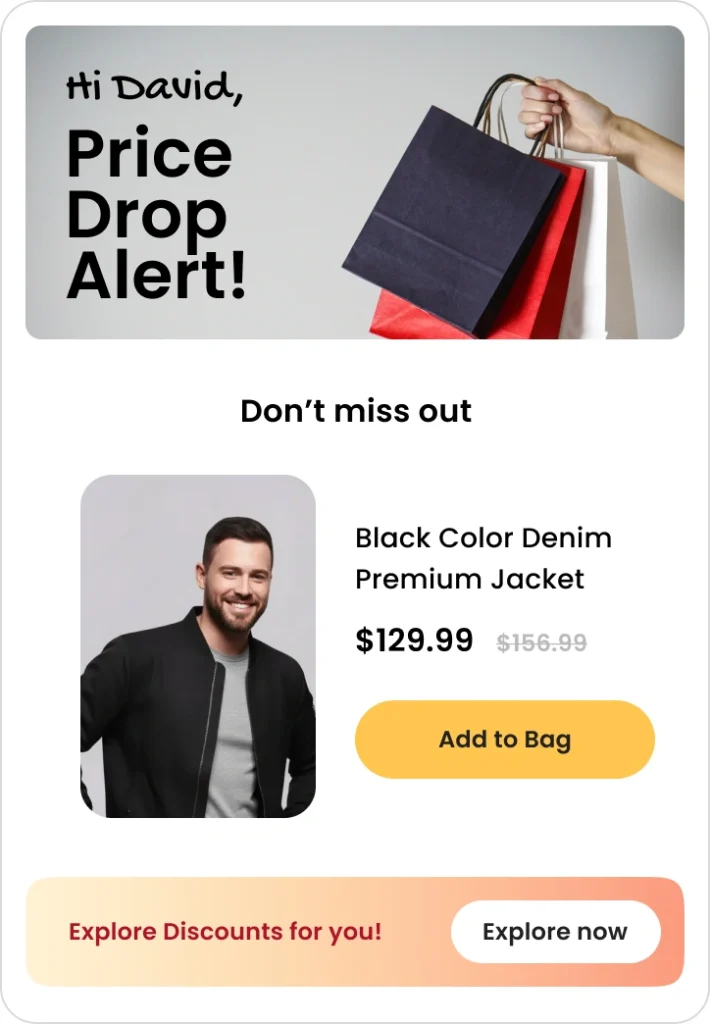
Price-drop
You sent a ‘Price Drop Alert’ today. Some customers open in 15 minutes, some open tomorrow.
With open-time logic, the module can:
- Show the latest price at open
- Remove items that are no longer discounted
- Replace with similar discounted items if the original is out of stock
Abandoned Cart
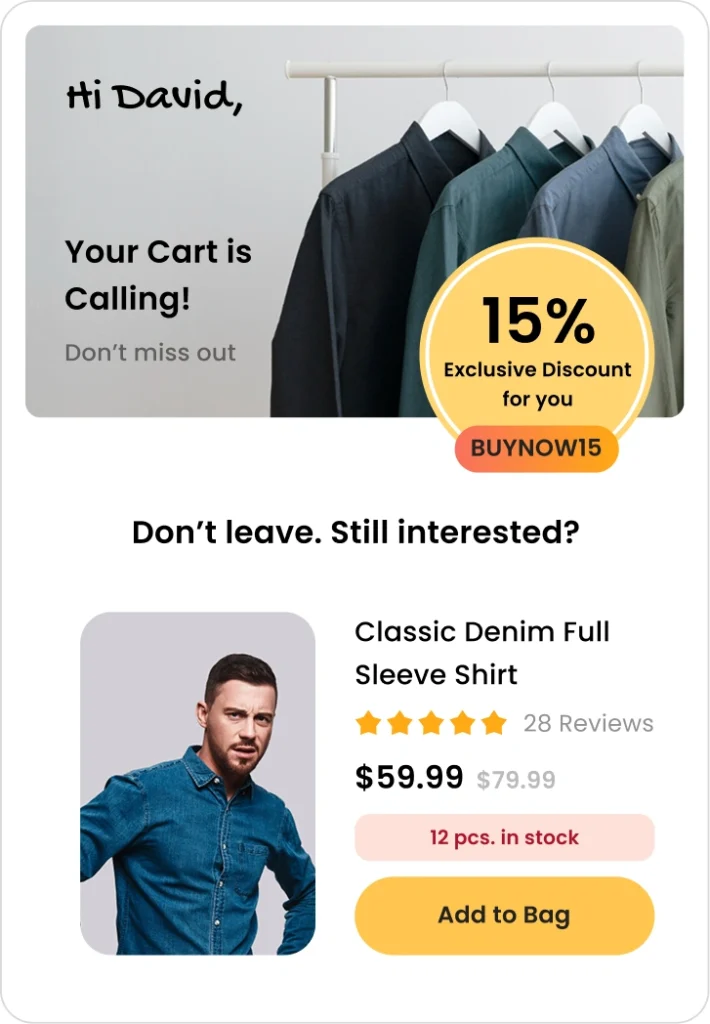
An abandoned cart email should not look like a receipt. It should look like a conversion-ready product page.
Active Content use case includes enriching cart flows with ratings/reviews, social proof messages, badges like “Limited stock,” and recommendation add-ons.
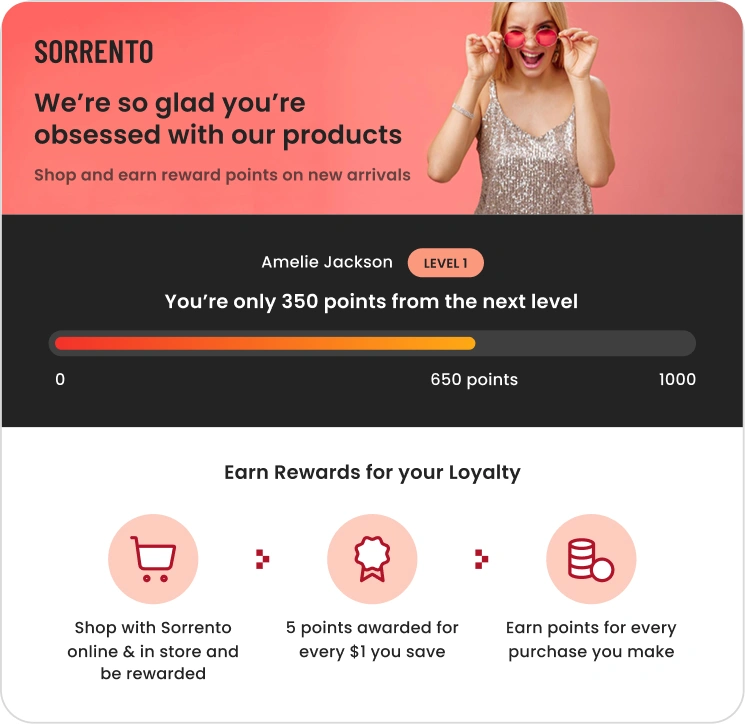
Loyalty Progress Bar
Loyalty emails often arrive at the wrong time. A customer earns points after the email is sent, then opens it and sees an outdated status. Active Content’s dynamic loyalty visualization shows live progress toward the next tier at open, which is more motivating than a static line of text.
One Campaign, Multiple Languages
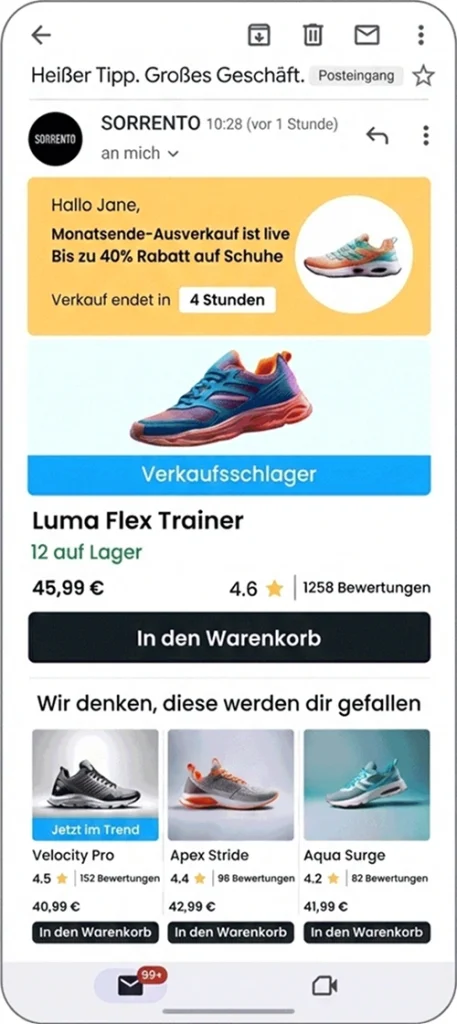
Language personalization is a great quick win example because it’s instantly visible and operationally painful when done manually.
Active Content can pick the right language asset from a CMS based on language preference from your CDP, while keeping it as a single campaign.
Why Open-time Email Personalization is a Game Changer
Open-time personalization is not just better personalization. It’s a new way of thinking. It changes three core economics of retail CRM:
Reduce the cost of being wrong
When your email shows stale pricing or unavailable products, you pay twice:
- You lose the conversion
- You create a brand trust gap
Open-time rendering reduces those mismatch moments because content stays current at open-time.
Move faster without sacrificing creative quality
Retail teams are constantly balancing speed and polish. If you want a rich, creative that uses multiple data sources, you often need IT help and long lead times.
Active Content positions itself as marketer-friendly. It stitches together disparate data, reduces IT dependency, and supports sophisticated creative assembly through a no-code workflow.
Scale 1:1 experiences without cloning templates
Segment-level personalization usually means more templates. True 1:1 means more logic, fewer copies.
Active Content’s single master template with a dynamic variations approach is designed for that reality.
Open-time Email Personalization is How Email Catches up to Retail Reality
Retail moves in minutes. Inventory shifts, promos change, customer intent spikes and fades. But most email programs still operate like they’re publishing a flyer- locked content, fixed assumptions, and a hope that the customer opens at the right time.
Open time email personalization flips that dynamic. It lets email behave more like your storefront- current, contextual, and tuned to what’s true right now. That matters because relevancy is not just a creative metric in retail. It’s a revenue metric. When customers see accurate pricing, available products, and content that matches their intent, they click with confidence instead of hesitation.
The bigger win is operational. With Active Content, you’re not signing up to build 25 versions of the same campaign or drag IT into every new idea. You’re building smarter templates once, then letting dynamic blocks do the heavy lifting using the data you already have. That’s how teams scale personalization without slowing down.
If you’re looking for a practical next step, start by auditing your current lifecycle emails and asking one simple question: How often does this message go wrong between send and open? Wherever the answer is “often,” open-time personalization is usually the fastest path to better performance and a better customer.