



Pulling customers to an ecommerce product site is a struggle, but converting those visitors into buyers is a battlefield. While dashboard metrics often paint a promising picture, the reality on the ground is defined by the cognitive load placed on the shopper. There is a critical threshold at which active discovery, the joy of finding, becomes manual labor, leading to ‘search fatigue’ and an immediate bounce.
Search is the first true 1:1 touchpoint between your brand and the consumer. It is the moment shoppers articulate demand in their own words. Yet, an experience that feels helpful in one moment can become disappointing the next. This happens because most ecommerce search engines still deliver static responses to shopper intent that is highly variable and context-driven. When platforms fail to adapt to this variability, a Findability Gap emerges.
The Findability Gap is the disconnect that occurs when a search engine fails to surface the right product, even when it exists in the catalog. Products remain hidden in plain sight, acquisition spend goes to waste, and trust erodes. Left unaddressed, this gap quietly increases discovery friction and inflates customer acquisition costs.
The modern B2C search journey is messy, not linear
Shoppers today do not search the way ecommerce search engines expect them to. Real-world ecommerce search behavior is rarely clean, precise, or sequential.
Instead, shoppers search in ways that reflect human thought:

Occasion-based ecommerce search

Mood-based ecommerce search

Descriptive/subjective ecommerce search
These queries are often long-tail and context-heavy, stretching the limits of traditional engines built for structured input. Most search engines remain tuned for exact keyword matches and static relevance rules. They excel at matching data but fail when intent is emotional or unclear. The result is an experience that is technically relevant yet experientially unsatisfying.
Traditional search thinking assumes intent is fixed when a search engine receives a query. In reality, intent unfolds as shoppers interact with results—clicking, refining, scrolling, and comparing. When search fails to adapt to this messy human behavior, discovery becomes effortful instead of intuitive.
Why traditional search metrics miss the point
Most B2C marketers evaluate performance using a familiar set of KPIs:
- Search Usage: The volume of visitors interacting with the search bar.
- Search-Assisted Revenue: Total revenue from sessions where search was used.
- Zero-Result Rate: How often a query returns nothing.
- Top Queries: The most frequent search terms.
While these KPIs confirm outcomes, they are blind to discovery quality.
Consider a shopper looking for a “black dress” on a fashion retailer’s site:
Scenario A: The search engine recognizes her past affinity for luxury brands and evening wear. She sees a relevant ‘lace midi dress’ as the first result, clicks on it, and adds it to the cart within seconds.
Scenario B: Shopper struggles with a context-blind search engine. Because the system cannot detect in-session affinity, it fails to prioritize her specific need for formal wear, resulting in suggestions from a wide range of categories, making this a high-effort journey marked by manual filtering and ‘search fatigue’.
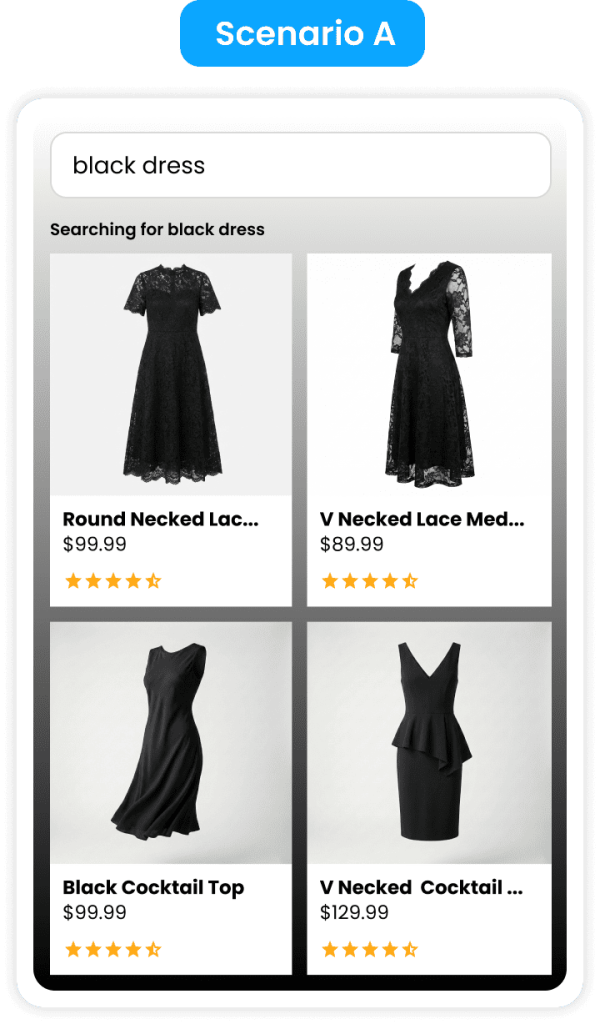
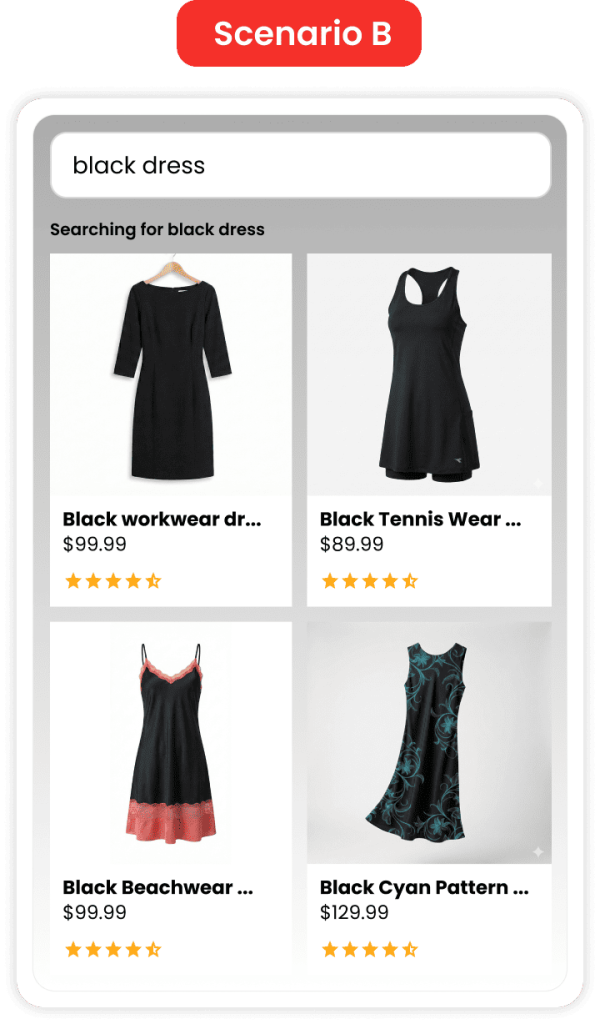
The ecommerce dashboard reality is misleading. On paper, these sessions look identical as both recorded a “Conversion” and “Search-Assisted Revenue.” But in reality, the dashboard is blind to the logic behind the scrolls.
In our example, scenario A gives the shopper a gratifying experience. In Scenario B, the shopper – if they convert – will do so despite the search engine. Traditional metrics reward the conversion but ignore the nudge, the hidden effort that erodes long-term loyalty.
This is where Findability failures hide.
Defining Findability in plain language
Findability puts shopper intent in focus. It is defined by how quickly and confidently a shopper moves from intent to the right product. We measure this through three core parameters:
Relevance
Do results align with intent, context, and real-time behavioral signals?
Effort
How much labor did the shopper exert? (Measured by clicks, refinements, and backtracking).
Outcome
Did the shopper engage meaningfully with a relevant Product Detail Page (PDP)?
Together, these form the Findability Score. Unlike traditional KPIs, this score makes discovery friction visible. It enables merchandising and CX teams to align around a single number that reveals exactly where the catalog is “leaking” revenue due to poor discovery.

A practical Findability scorecard for B2C teams
Findability does not require rebuilding your ecommerce search engine from scratch or running a complex data science project. It can be operationalized using ecommerce site search metrics that most teams already track or view on their sites, but through a different lens.
A practical findability scorecard might include (and not be limited to) the following:
- CTR on search results
(the percentage of searches where a shopper clicks on at least one search result) - Average click distance
(how far down the list a shopper typically has to go before they click a product from the results) - Zero- and thin-result rates
(how often your search engine fails to show enough reasonable options) - Query reformulation rate
(the percentage of search sessions where shoppers quickly change or retype their query after seeing the results) - Search exit rate
(the percentage of search sessions that basically end on the Search Results Page (SRP) without meaningful engagement)
Sample Findability Scorecard – “Women’s Dresses”
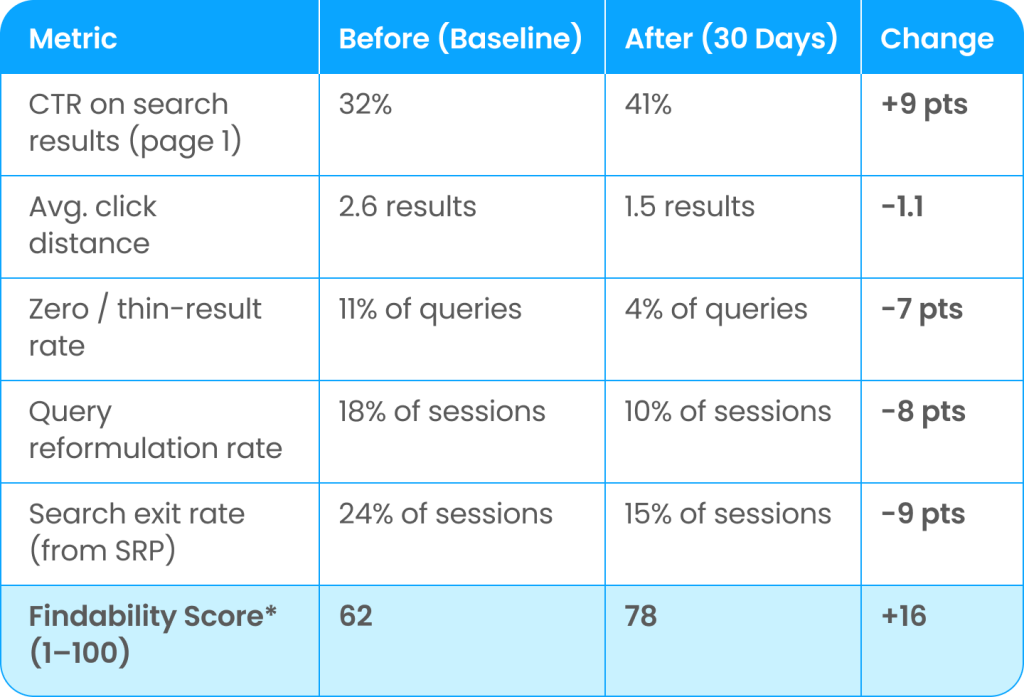
Individually, ecommerce site search metrics signal friction. Together, these metrics paint a clear picture of whether the ecommerce site search is helping or hindering discovery. When tracked consistently, these signals often reveal opportunities for improvement that deliver measurable impact within weeks, not quarters.
Teams can roll these signals into a simple Findability Score by category, brand, or key query group, creating one number to rally around. The goal is not perfection; instead, clarity: knowing exactly where shoppers struggle and where improvements matter most. In a nutshell, how shoppers search on an ecommerce site.
Closing the Gap with Find™
Overcoming the Findability Gap is less about adding features and more about aligning search with real shopper behavior. Find™ addresses this by transforming search from a static utility into a dynamic personalization surface through four key levers:
 Natural Language Understanding
It bridges the gap between internal catalog jargon and shopper language by auto-learning synonyms and intent (e.g., recognizing that “best shoes for standing all day” requires comfort-rated attributes). Behavioral Ranking
Instead of static rules, Find™ uses self-learning AI to rank results based on real-time affinities and in-session behavior, significantly reducing “click distance.” Findability Analytics
It provides a dedicated lens into the Findability™ Score, allowing teams to move beyond “search volume” and pinpoint precisely where shoppers are struggling. Real-Time Catalog Freshness
Ensures that pricing and availability stay in sync, so shoppers never find a product only to realize it is out of stock.
Conclusion: From search activity to shopper success
B2C brands have historically optimized for how often shoppers search; the next competitive advantage lies in how easily shoppers can find them.
Traditional metrics tell you what happened, but Findability tells you how it felt. By shifting focus to a shopper-centric metric that reflects effort and confidence, brands can stop forcing customers to work for their purchases.
Find™ brings these elements together—combining self-learning AI with behavioral intelligence to ensure that every search is a direct path to discovery, not a battlefield of frustration.