



Over the past decade, ecommerce has been optimized for one thing: human decision-making.
But that’s beginning to change.
AI shopping assistants and autonomous agents are increasingly playing a more active role in how products are discovered, evaluated, and even purchased.
As commerce evolves to serve both humans and machines, the question becomes: What signals drive those decisions?
The Layers of Modern Commerce
To understand where social proof messaging fits, it helps to look at commerce as a set of interconnected layers:
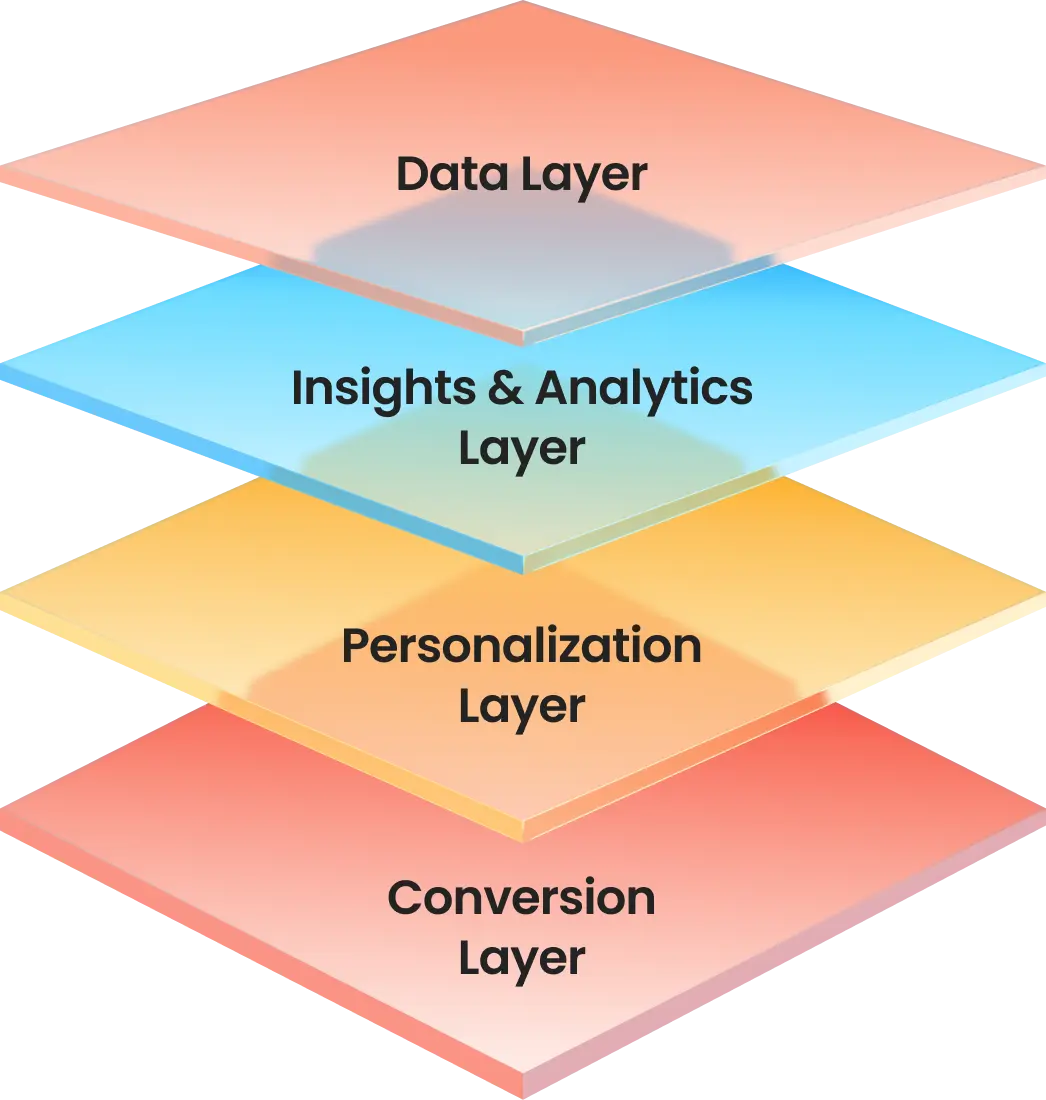
- Data Layer: Raw behavioral signals like views, add-to-carts, and purchases
- Shopper Insights & Analytics Layer: Interpreting that data into patterns like demand, popularity, and momentum
- Personalization Layer: Using those insights to tailor experiences, recommendations, and journeys
- Conversion Layer: Where insights are surfaced as actionable nudges — like social proof messaging
This is how social proof has traditionally been positioned: as a conversion-layer tactic that helps shoppers make decisions faster.
But as commerce evolves, its role is expanding beyond just the final layer.
What starts as a conversion-layer message is actually powered by deeper layers of data and insight, and that’s where its future potential lies.
Social Proof Messaging Has Always Been More Than Messaging
Every social proof message is powered by real-time shopper behavior:
- Views
- Add-to-carts
- Purchases
When you display “24 people bought this in the last hour,” you’re not just showing a message — you’re exposing a data point about demand.
In other words:
Social proof messaging doesn’t just influence decisions — it reflects real-time behavioral signals.
And those signals are becoming increasingly important.
From Shopper Cues to Decision Signals
Today, these signals are primarily used to guide human shoppers.
But as commerce evolves, the same signals are beginning to serve another purpose: structured decision inputs.
Consider this:
- Human-facing message: “Purchased 24 times in the last hour”
- Underlying signal: High purchase velocity
- Human-facing message: “Trending now”
- Underlying signal: Rising product momentum
This dual nature is what makes social proof messaging solutions so powerful. They operate at both the experience and data layers.
Message Displayed to Shopper
- Purchased 37 times today
- 500 shoppers viewed it this week
- Only 5 left in stock
Signal to Personalization Engine
- Purchase velocity
- Trend acceleration /
Product Popularity - Inventory pressure
Why Signals Are Becoming Critical in Modern Commerce
As product catalogs grow and shopper expectations rise, decision-making is becoming more complex.
Retailers need ways to:
- Surface the most relevant products
- Highlight what’s gaining traction
- Reduce friction across the funnel
This is where behavioral signals play a crucial role.
Signals like:
- Purchase velocity
- Popularity trends
- Engagement levels
help answer key questions:
- Which products are gaining momentum right now?
- Which items have strong shopper validation?
- Which options are most likely to convert?
Social proof messaging surfaces these answers in an intuitive, credible, and scalable way.
The Next Layer: Commerce That Responds to Signals
We’re now entering a phase where commerce systems are becoming more dynamic and responsive.
Advances in:
- AI-driven personalization
- Real-time data pipelines
- Automated decisioning
are enabling platforms to act on signals in addition to displaying them.
This means:
- Recommendations can adapt instantly to demand shifts
- Merchandising can respond to real-time trends
- Experiences can evolve without manual intervention
In this environment, signals are no longer just informative. Rather, they become operational inputs.

Where Social Proof Messaging Fits In
Traditionally, social proof messaging has been seen as a conversion tactic i.e. a way to nudge shoppers toward action.
But in modern commerce, it becomes:
A real-time signal layer that captures and communicates product demand.
The same data that powers:
- “X people bought this”
can also inform:
- ranking decisions
- recommendation strategies
- automated merchandising logic
This makes social proof one of the cleanest and most scalable indicators of demand available to retailers today.
Must explore social proof messaging use cases
From Optimization to Calibration
As discussed in our previous blog on Coverage Analysis, the effectiveness of social proof messaging depends on choosing the right:
- Metrics (views, add-to-carts, purchases)
- Thresholds (minimum activity levels)
- Intervals (time windows)
Because:
- Too little signal → limited reach
- Too much noise → reduced credibility
The goal is to find the balance where signals are both:
- meaningful (high intent)
- scalable (broad coverage)
This calibration ensures that your social proof messaging remains both trustworthy and effective.
Looking Ahead: A Unified Signal Layer for Commerce
As commerce continues to evolve, one thing is becoming clear:
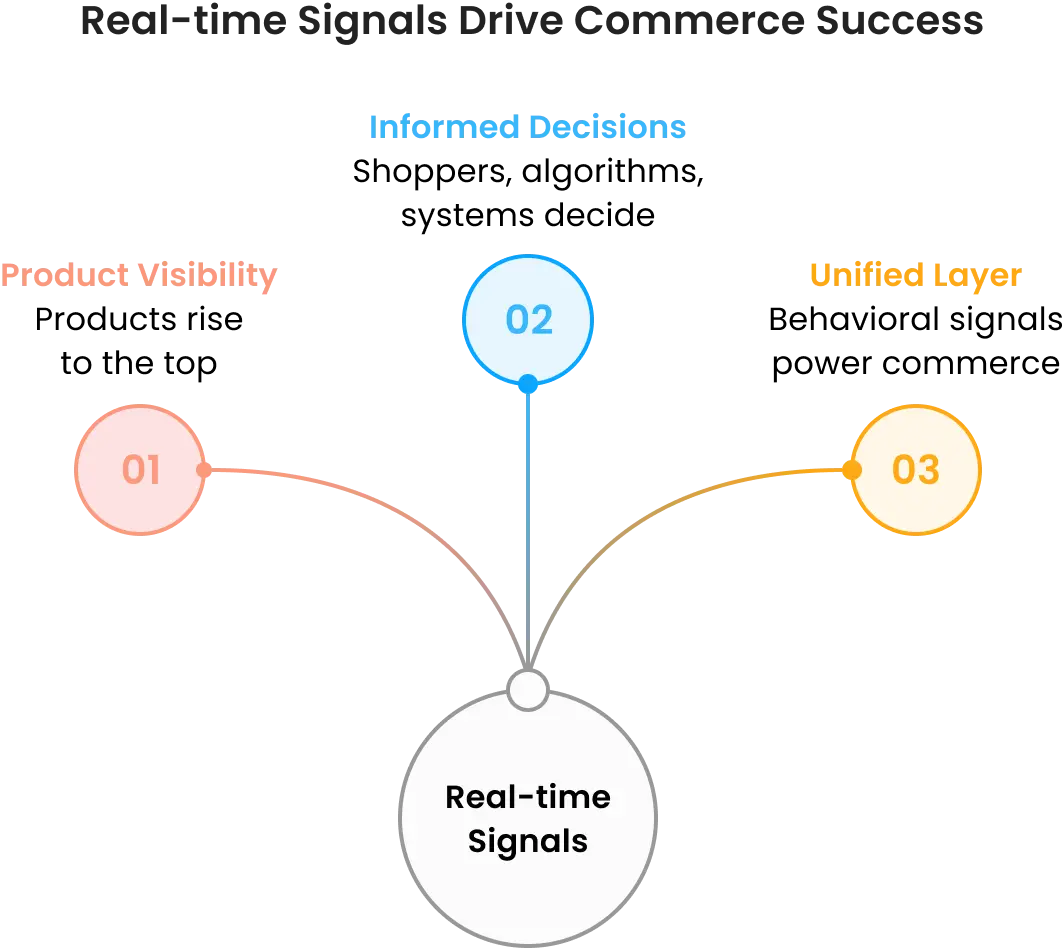
The retailers that win won’t just have great products or great experiences.
They will have strong, real-time signals.
Products that demonstrate:
- consistent demand
- strong engagement
- accelerating momentum
will naturally rise to the top, whether decisions are made by:
- shoppers
- algorithms
- or increasingly intelligent systems
In many ways, we are moving toward a unified layer where behavioral signals power both experience and decisioning.
And social proof sits at the center of that shift.
Final Thoughts
Social proof messaging started as a way to influence shopper behavior.
Today, it does much more.
It captures real-time demand, reflects collective behavior, and helps scale trust across the customer journey.
And as commerce systems become more responsive and intelligent, these signals will only grow in importance.
Ready to turn shopper behavior into scalable, high-impact signals?
Explore how Algonomy’s social proof messaging solutions help you capture, calibrate, and activate real-time demand across your catalog.